Upgrading your RV’s air conditioner is one of the highest-impact comfort projects you can tackle, but it’s also easy to get wrong. The roof opening is standardized, yet BTU ratings, airflow, weight, and noise vary dramatically between units — and once you’re on the roof with the old unit unbolted, there’s no going back.
Today we’re taking a close, honest look at one of the most popular drop-in replacements on the market: the Dometic FreshJet 3 Series 13.5K BTU RV Rooftop Air Conditioner (White). We’ve already covered its core performance in our full Dometic FreshJet 3 Series 13.5K review, so this guide focuses on the buying decision: real customer feedback, installation reality, how it stacks up against rivals, and who should — and shouldn’t — buy it.
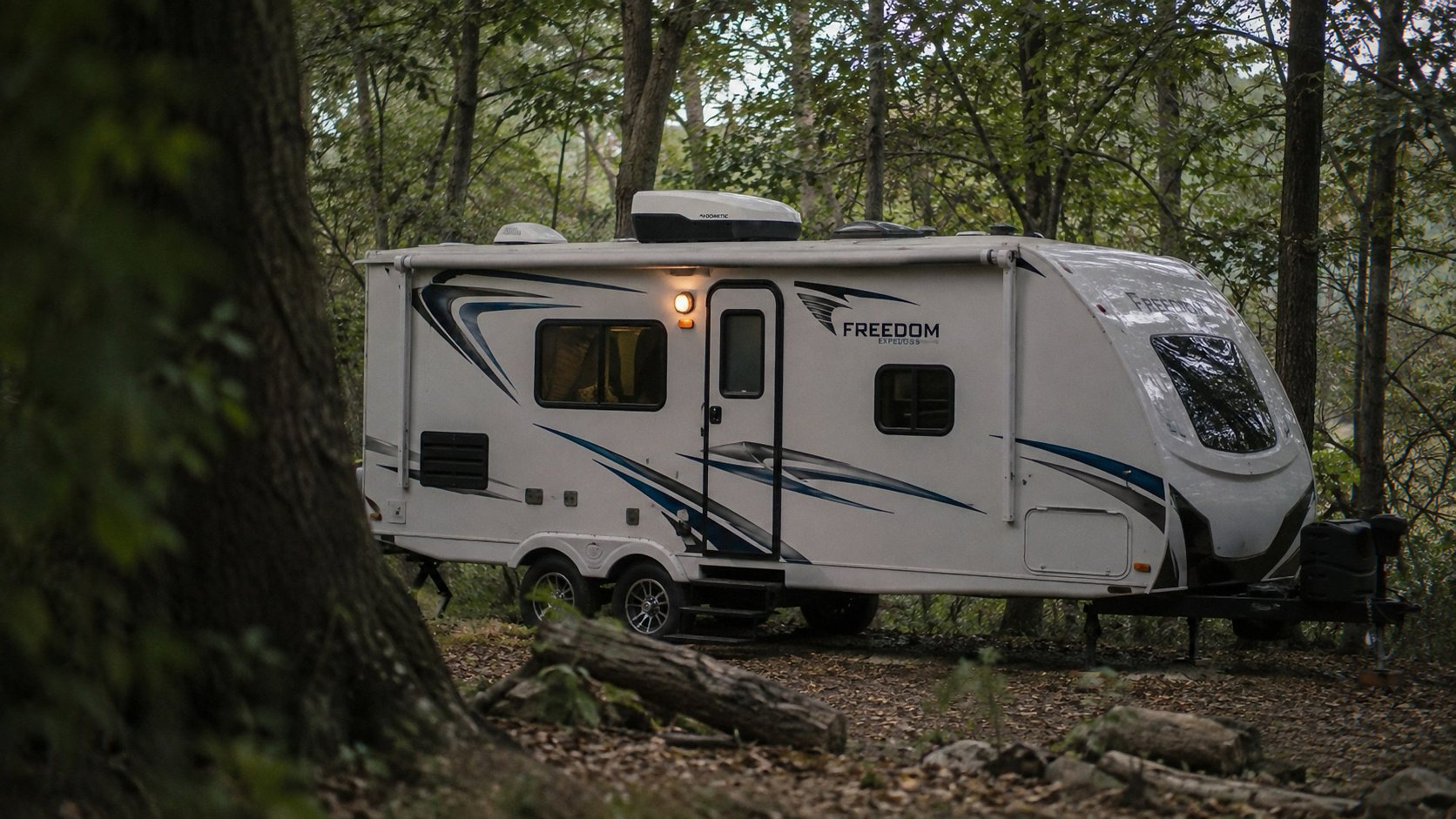
Why the FreshJet 3 Series Stands Out
Dometic positions the FreshJet 3 Series as a direct upgrade path for owners of aging Brisk, Brisk II, or Duo-Therm units — and the sales sheet makes four claims that matter for RVers:
- More cooling capacity than comparable competitive rooftop units at the same opening size
- Higher airflow than other rooftop air conditioners in its class
- 14% lighter than the equivalent Dometic Brisk II model
- 4 dB quieter than select competitive rooftop air conditioners
The last two points deserve special attention. Weight matters more than most buyers realize: every pound on your roof raises the center of gravity, loads the roof structure, and makes installation a two-person job instead of one. And 4 dB of noise reduction is roughly half the perceived loudness — a meaningful difference when you’re trying to sleep in a campground.
The FreshJet 3 is also backwards-compatible with existing Dometic and competitor air distribution boxes, which is the single biggest practical selling point: if your RV already has ducted ceiling vents, you can often reuse the interior trim and ductwork instead of tearing the ceiling apart.
Specifications at a Glance
| Spec | Detail |
|---|---|
| Brand | Dometic |
| Model | FreshJet 3 Series |
| Cooling capacity | 13,500 BTU (1.13 tons); 15,000 BTU variant also available |
| Special features | Lightweight design |
| Dimensions | 29.5”D × 27.56”W × 13.99”H |
| Colors | White (Black also available) |
| Box contents | 1× RV air conditioner unit, user manual |
| Seller | United RV Center |
| Returns | 30-day refund/replacement |
At the time of writing, the 13.5K model is listed around $882 (down from a $1,049.99 list price) — notably cheaper than many 15K competitors, which is worth remembering when you see the price tags below.
What Real Owners Say (the Good and the Bad)
Before you buy any rooftop AC, read what people who actually hauled one onto their roof think. The FreshJet 3’s review profile is genuinely mixed — roughly 3.6 out of 5 across about 140 ratings — and the pattern is very consistent.
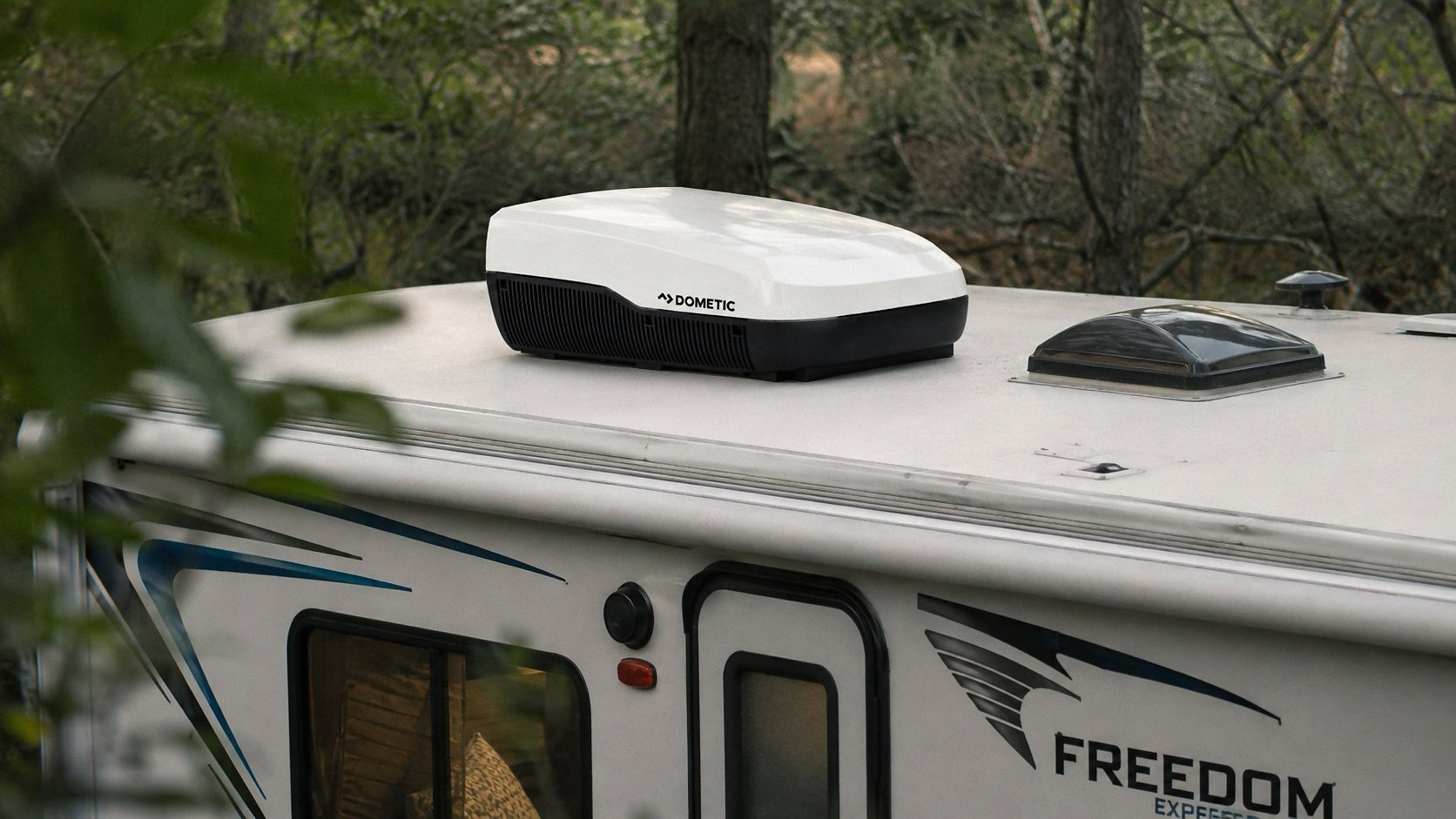
The Good
Installation is genuinely plug-and-play for most owners. This comes up in nearly every positive review. One buyer swapped a 22-year-old Dometic Duo-Therm in a straightforward afternoon: “Line up the hole. Tighten the 4 set bolts evenly. Plug in the 6-wire plug. FreshJet to the rescue.” Another replaced a 2013-era Dometic unit in under 90 minutes, using the same electrical control box and interior trim: “If you can lift 70 lbs over your head, you can install it yourself.”
Cooling performance is real. A commonly cited data point: one owner reported pulling their camper from 80°F down to 64°F in 30–45 minutes. Another off-grid owner on solar ran the unit at roughly 2,000W at compressor startup, settling to 1.6–1.7 kW continuously, then ~450W for the fan — useful numbers if you’re planning your battery budget.
Quieter than the old units. Almost every upgrade reviewer notes the FreshJet 3 is quieter than the Brisk/Brisk II or Duo-Therm it replaced, which lines up with the 4 dB claim.
The Bad (read this before ordering)
- Packaging complaints are the #1 issue. Multiple reviewers report arriving units with cracked base plates or dented plastic housings — and at least one says even units at an RV dealer were damaged in shipping. Amazon customer service generally handled refunds quickly, but if you order one, inspect the box and the unit before you accept it, and consider buying through a seller with easy returns.
- A small number of units fail early. The most alarming review describes a compressor wire burning out from overheating after two months. This appears to be an outlier rather than the norm, but it’s the reason we recommend the extended protection plan (see below).
- The advertised warranty registration site was reported as not working by more than one buyer. Minor, but annoying if you want your coverage on record.
How It Compares to the Competition
Context is everything when spending $800–900. Here’s where the FreshJet 3 sits relative to the alternatives we’ve reviewed:
- Coleman Mach 15 Plus (15,000 BTU): If you need maximum raw cooling for a larger rig, the Coleman Mach 15 Plus review shows why it’s the heavy-duty pick — but it’s heavier, louder, and pricier than the FreshJet 3. For most 20–30 foot trailers, 13.5K is plenty and the weight savings pay off.
- Coleman Mach 3 Plus (Airxcel): A classic, budget-friendly workhorse. Our Coleman Mach 3 Plus Airxcel 08-0079 review covers its pros and cons — if you prioritize the lowest price and don’t mind more noise, it’s a fine option. The FreshJet 3 wins on quiet operation and lighter weight.
- Dometic Blizzard NXT (15K, Black): Dometic’s own premium line. The Dometic Blizzard NXT 15K review highlights its high airflow and beefier build — but it costs meaningfully more. The FreshJet 3 Series is the value pick within Dometic’s own lineup.
- Heat pump models: One important caveat — the FreshJet 3 Series is cooling-only. If you want heating without running your furnace, check our roundup of the best RV air conditioners with heat pump for 2026 before you commit, because heat-pump models change the whole equation.
The short version: the FreshJet 3 13.5K is the sweet spot for owners replacing a mid-size unit who want quieter, lighter, and cheaper than the 15K premium crowd, without giving up cooling power.
Installation Tips We Learned from Owner Reports
- Check your existing control box and trim. Many owners reused their old electrical box, T-stat, and interior ceiling trim — the FreshJet 3 ships with the roof gasket and user manual, but not always an interior panel. Inspect what you have before ordering.
- Get a helper or a workaround. At roughly 70 lbs, lifting it over your head is the hardest part. One clever owner backed his truck up next to the camper and stood in the truck bed to set the unit on the roof.
- Clean and reseal the old mating surface. Older roofs get flat and weathered; silicone sealant on the opening edges makes for a much better seal.
- Expect 45 minutes to 2 hours total including removing the old unit. Several owners did the full swap in about an hour.
- Photograph the packaging before opening. If anything arrives damaged, documented evidence makes a claim trivial.
Frequently Asked Questions
Does it need professional installation? No — for the majority of RVs with a standard 14”×14” roof opening, it’s a DIY job (see tips above). If you’re not comfortable on a roof or your wiring is non-standard, an RV tech can do it in about 30–45 minutes.
Is it energy efficient? It’s a conventional rooftop AC, so expect a startup spike around 2,000W settling to roughly 1.6–1.7 kW while running — fine for campground pedestals, but budget accordingly if you’re off-grid on solar or batteries.
Does it have a remote control? No — the FreshJet 3 Series uses the standard wall thermostat/control interface. If app or remote control is a must-have, look at the newer smart-capable units instead.
Can it be used in humid climates? Yes, like most rooftop units it handles humidity fine as part of normal cooling operation; just keep the filters clean.
Verdict: Who Should Buy the Dometic FreshJet 3 Series 13.5K?
Buy it if: you’re replacing a Brisk II / Duo-Therm / older Coleman, want a noticeably quieter and lighter unit, plan to DIY the install, and don’t need heat-pump functionality. At its current street price, it’s one of the best value-for-money drop-in upgrades available.
Skip it if: you need heating, you’re outfitting a large fifth wheel that truly needs 15K BTU, or you want premium extras like WiFi/remote control.
And remember the two practical cautions: inspect the packaging immediately on arrival, and strongly consider the 3-year protection plan (~$225) — the handful of early-failure reports makes the peace of mind worthwhile on a unit this expensive.
Ready to make the swap? Check the current price here: Dometic FreshJet 3 Series 13.5K BTU RV Rooftop Air Conditioner on Amazon
Disclosure: As an Amazon Associate, we earn from qualifying purchases at no extra cost to you. Prices and availability are accurate as of the date published and may change.