Furrion Chill Cube 18K BTU RV Air Conditioner Review: A Practical Look at Variable Speed Cooling
The Furrion Chill Cube 18K BTU RV air conditioner is the kind of rooftop AC that catches your attention if you have already lived with an older RV unit through a hot summer. Most traditional RV air conditioners are not subtle. They kick on hard, pull a noticeable load, cool aggressively for a while, shut down, and then repeat the same cycle all night. The Chill Cube takes a different approach with a variable speed compressor, an 18,000 BTU cooling rating, R32 refrigerant, and a lower-profile rooftop body.
As an Amazon Associate I earn from qualifying purchases.
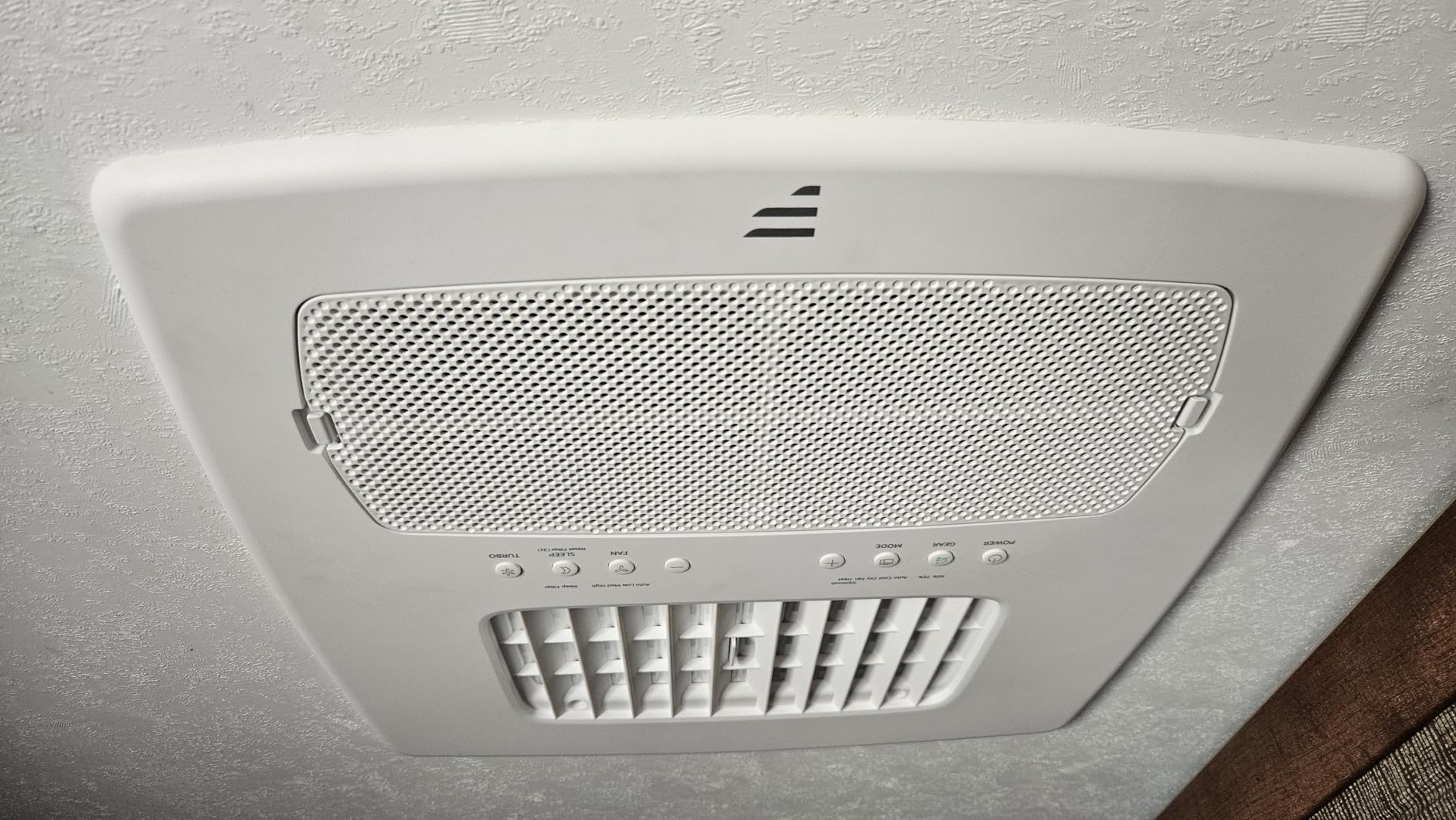
This review is based on the provided product listing, specification screenshots, feature images, and owner feedback. I am not treating every marketing claim as a lab result. RV air conditioning is messy in the real world. A unit that feels excellent in a well-insulated trailer with sealed ducts can feel average in a large motorhome with big windows, weak insulation, and full afternoon sun hitting one side. The better question is not “Is this AC magically perfect?” It is “Does this design solve the problems RV owners actually complain about?”
For many campers, the answer may be yes, but only if the installation details are handled correctly.
Quick Verdict
The Furrion Chill Cube 18K is worth considering if you want a rooftop RV air conditioner that feels more controlled and less rough than a standard single-speed unit. Its strongest selling point is the variable speed compressor. That matters more than it sounds, because it can reduce abrupt starts, help maintain a steadier cabin temperature, and make the AC feel less disruptive during sleep.
I would put this AC on the shortlist for RV owners who camp in hot climates, travel with pets, run a solar or generator setup, or simply hate the loud cycling behavior of older rooftop units. The 18,000 BTU rating also gives it more cooling headroom than many common 13.5K and 15K BTU RV air conditioners.
The catch is the buying process. The product materials make it clear that the air distribution box, often called the ADB, may be sold separately. That is not a small detail. If you buy the rooftop unit only and your existing ceiling assembly does not match, the installation can turn into a parts hunt. Before ordering, check the exact model, whether it is ducted or non-ducted, what comes in the box, and whether your RV needs a separate control or ceiling assembly.
My practical verdict: this looks like a strong upgrade for the right RV, especially if noise and power behavior matter to you. I would not buy it casually without verifying compatibility first.
Key Specifications
The table below summarizes the main specs shown in the provided product information and listing screenshots.
| Feature | Details |
|---|---|
| Product name | Furrion Chill Cube 18K BTU Variable Speed RV Rooftop Air Conditioner |
| Cooling capacity | 18,000 BTU |
| Product type | Rooftop RV air conditioner |
| Refrigerant | R32 |
| Compressor | Variable speed compressor |
| Compressor type listed | Rotary scroll |
| Inverter type | Has inverter |
| Color | White |
| Installation type | Rooftop |
| Application | RV |
| Additional feature | Silent Mode |
| Advertised weight | 72.4 lbs |
| Dimensions shown | 29 in. length, 29.5 in. width, 14.5 in. height |
| Included component shown | 18K BTU RV rooftop air conditioner |
| Important note | Air distribution box may be sold separately |
| Model information shown | FACR18VSDA-PS-AM / related Chill Cube 18K listing variants |
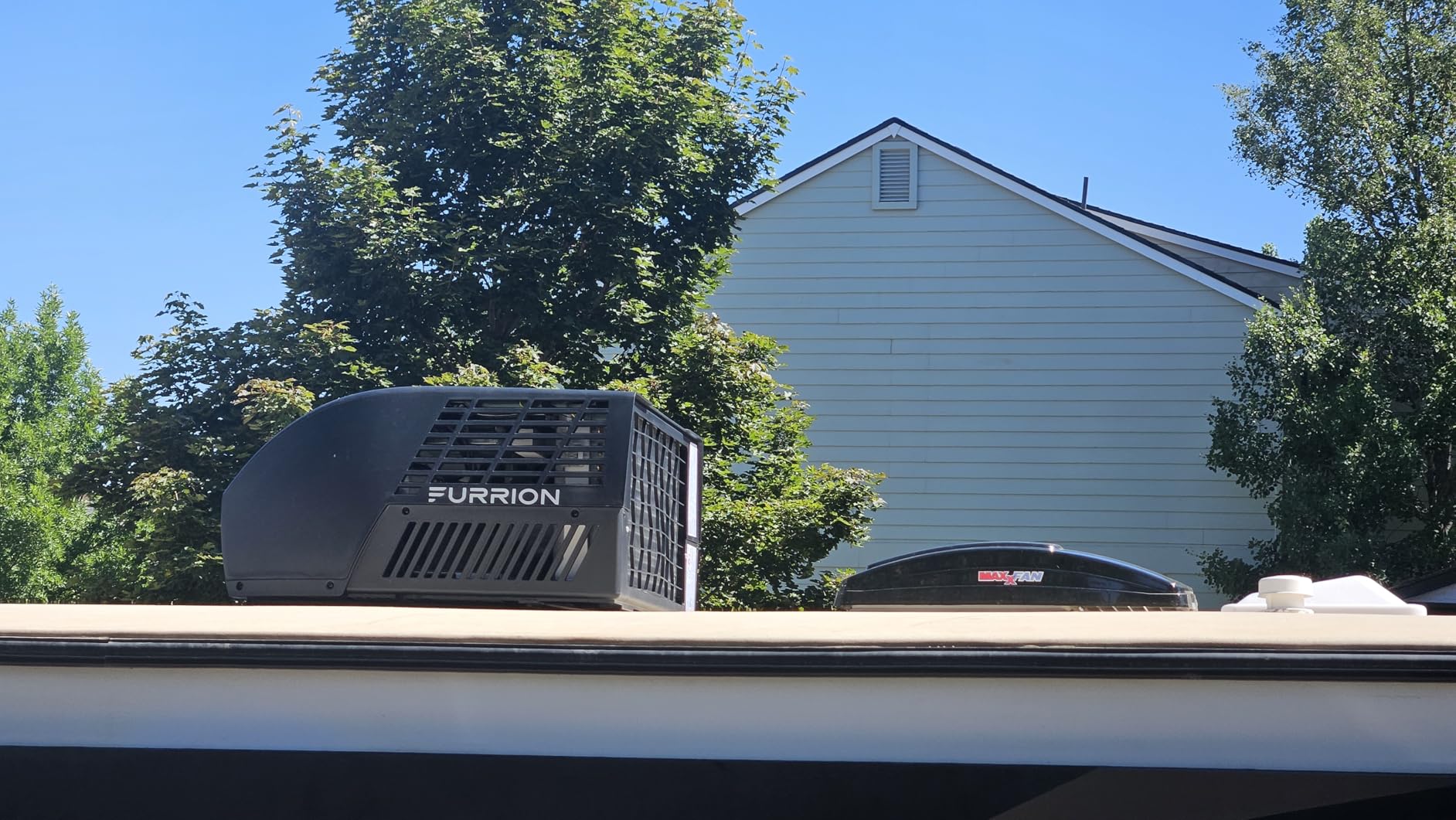
A few of these specs deserve extra attention. The 18,000 BTU rating is higher than the common RV rooftop AC sizes many owners are used to. The 72.4 lb listed weight is also notable, because rooftop weight affects installation, handling, and sometimes roof structure concerns. The shown dimensions make it look compact for a high-output rooftop unit, but you still need to measure roof clearance if you store the RV indoors or have solar panels, vents, antennas, or other rooftop equipment nearby.
The variable speed compressor is the spec that changes the ownership experience the most. A larger BTU number helps with heat, but compressor behavior affects comfort hour after hour.
First Impressions
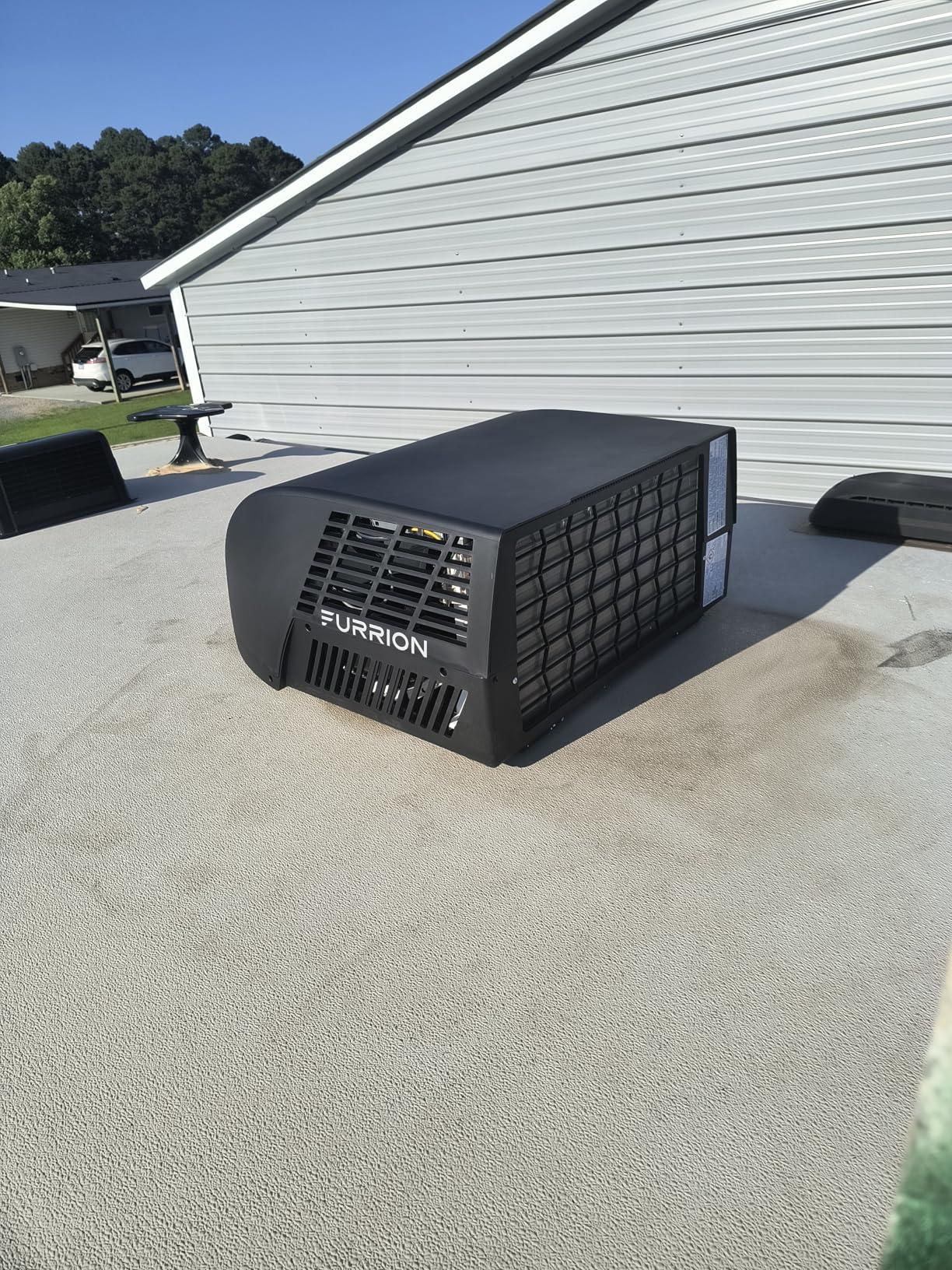
The Chill Cube does not have the tall, boxy look of many older rooftop RV air conditioners. Its shell is rounded, low-profile, and cleaner than the typical plastic rooftop block. The white body with black lower panels gives it a modern look without being too flashy.
Furrion’s product image says the unit is about 10% lighter than other units on the market and uses an aerodynamic rooftop shape to reduce drag and wind resistance. I would be careful with the “10% lighter” comparison because it depends on what models are being compared. Still, the listed 72.4 lb weight is reasonable for an RV rooftop AC in this output class.
The front and side vents are integrated neatly into the body. From a design standpoint, it looks like Furrion tried to make the unit feel less like an afterthought stuck to the roof. That may not sound important until you are looking at your RV from the side and realizing how much rooftop gear affects the overall profile.
What matters more is the install layout. A clean exterior does not guarantee an easy installation. The roof opening, wiring, return air path, duct layout, thermostat, ceiling trim, and air distribution box all matter. This is where the Chill Cube can be either a smooth upgrade or a frustrating project.
If you are replacing another Furrion unit or your RV is already prepared for this system, the process may be straightforward. If you are adapting it to an older Dometic, Coleman, or mixed duct system, take your time before buying parts.
Setup and Daily Use
The product listing says this camper air conditioner mounts with a simple bolt-on installation and comes with a step-by-step installation guide. That is useful, but “bolt-on” should not be read as “no planning needed.” Rooftop AC replacement is simple only when the roof opening, power supply, ducting, gasket, control hardware, and ceiling assembly all cooperate.
The most important setup detail is the air distribution box. One of the provided images says the air distribution box, listed with PN 2024040312 and ASIN B0F147CJCT, is sold separately and contains installation components. That line should not be ignored.
If your current RV ceiling assembly is not compatible, you may need that separate ADB. Some buyers may also need additional control components depending on their setup. This is especially important for ducted installations, where the return air and output air must be separated correctly. Poor separation can cause short-cycling, weak cooling, or cold air being pulled right back into the return.
For daily use, the Chill Cube’s appeal is fairly simple. A variable speed compressor can keep running at a lower speed instead of constantly slamming on and off. That usually feels better inside an RV. Temperature changes are less dramatic, nighttime operation can be less annoying, and the power draw may feel less punishing on a generator or inverter.
There are still limits. This is not a tiny portable fan. It is a full rooftop air conditioner. If you plan to run it from batteries, you need a serious electrical setup. Battery capacity, inverter size, solar input, wiring, ambient temperature, and thermostat settings all affect runtime. The Chill Cube may be more efficient than older-style units, but it does not make air conditioning free.
Cleaning Performance
For an RV air conditioner, performance is really about four things: how fast it pulls heat out, how evenly it distributes air, how well it manages humidity, and how much noise and power drama it creates while doing it.
The Furrion Chill Cube 18K looks strong on paper. The 18,000 BTU cooling capacity gives it more headroom than the 13,500 BTU units often found on travel trailers and smaller motorhomes. If your current AC struggles to recover after the RV sits in the sun, that extra capacity is the first reason to look at this model.
The provided product description says the Chill Cube is engineered with variable speed compressors to increase cooling efficiency and lessen operating noise. It also says the unit changes speeds based on the amount of cooling needed in the camper. That is the part I find most useful in real-world RV use.
A single-speed AC can cool, but it often does it in a rough way. It turns on, makes noise, pulls a hard load, runs cold, shuts off, and then waits until the RV warms up again. In a house, that may be tolerable. In a small RV bedroom, it can be irritating. You feel the air blast, hear the compressor, then wake up later when it kicks on again.
A variable speed compressor can smooth that out. It can run harder when the RV is hot, then slow down as the temperature gets closer to the set point. That can help the interior feel more stable. It may also help with humidity because the system can keep air moving and cooling instead of cycling too abruptly.

The noise graphic provided compares the Chill Cube at 60.1 dB against two other brands listed at 71 and 70.7 dB. That is a manufacturer comparison, so I would not treat it as a universal measurement for every installation. Roof thickness, ceiling assembly design, duct vibration, and mounting quality can change the sound you hear inside. Still, the general direction makes sense. A compressor that does not always run at full speed should be easier to live with than one that only has one operating personality.
The owner feedback screenshots also line up with that idea. One reviewer said the unit felt much better than their previous AC in a 38-foot RV and described the old 78°F setting as uncomfortable while 75°F on this unit felt chilly. They also mentioned more stable temperatures, better humidity control, and quieter night operation. That kind of comment is more useful than a generic “works great” review because it describes the actual comfort difference.
Another owner described replacing a 12-year-old Dometic unit and noticing a big difference in cooling and current draw. They said the RV was at 72°F in full sun and reported the older unit could not maintain the same comfort. Again, that is one person’s setup, not a controlled test. But it is relevant because many RV owners are not shopping for a first AC. They are trying to replace an older unit that technically runs but no longer feels good enough.
Airflow is the other half of the story. The listing graphics show cool air circulating through the RV interior, which is the ideal outcome. But duct condition matters. If your RV has leaky ducts, blocked vents, crushed foam channels, dirty filters, or a poorly sealed return path, the rooftop unit may not deliver its full benefit.

Before judging the Chill Cube, I would inspect the RV’s ductwork and return area. Many older campers lose a surprising amount of cooling inside the ceiling cavity. Sealing gaps with proper HVAC foil tape, cleaning the return filter, and making sure supply air is not mixing with return air can make a major difference.
Navigation and Smart Features
This is an RV air conditioner, so it does not have navigation in the way a robot cleaner or smart appliance might. The smarter part of the Chill Cube is how it manages compressor speed and cooling demand.
The listing materials describe a variable speed compressor that does not simply cycle on and off. Instead, it changes speed based on the cooling needed in the camper. That is the feature that gives this unit its more refined behavior.
There are three practical benefits.
First, temperature stability should improve. Instead of letting the RV warm up and then blasting cold air, the system can work more continuously.
Second, startup behavior should be easier on the electrical system. The listing materials mention eliminating abrupt starts, stops, and excessive amp draw associated with standard RV AC units. I would still verify your electrical setup before relying on that, but the concept is sound.
Third, noise can be less intrusive. A compressor that can slow down does not always have to operate at its loudest level.
The listing also references Turbo Cool Mode and Silent Mode. Turbo Cool is useful when the RV has been closed up during a hot day and you need a fast temperature drop. Silent Mode is the more interesting feature for overnight use, especially in smaller campers where the AC is close to the bed.
I would not assume advanced app control or Wi-Fi control unless the exact seller page and included control hardware say so. Some owner feedback mentions using an added controller for remote access, but that does not mean every Chill Cube package includes that feature. If remote control matters, verify it before purchase.
Battery Life and Maintenance
The Chill Cube does not have its own battery, but many RV owners care about battery runtime because they want to know how this AC behaves with solar, lithium batteries, an inverter, or a generator. The provided materials claim higher capacity and better energy efficiency compared with typical RV ACs, with more battery runtime during off-grid adventures.
The variable speed compressor is the reason that claim is believable in principle. A conventional rooftop AC can demand a heavy startup surge and then cycle repeatedly. A variable speed unit can reduce that harsh behavior and may draw less power once the RV is close to the target temperature.
That does not mean a small battery bank will suddenly run AC all day. Air conditioning is still one of the largest loads in an RV. If you are running on lithium batteries, the important questions are:
How large is the battery bank? What is the continuous and surge rating of the inverter? How much solar input do you realistically get in hot weather? How hot is the RV before the AC starts? How low are you setting the thermostat? How much heat is coming through windows and roof panels?
The owner review mentioning solar use is encouraging, but it should be read as one setup, not a guarantee. A well-built solar system with large batteries is very different from a basic weekend battery setup.
Maintenance is mostly standard rooftop AC care. Keep the return filter clean. Check the roof gasket and seal. Watch for vibration. Keep leaves and debris away from the exterior vents. Make sure condensation drains correctly. Listen for new noises after travel days, because road vibration can loosen things over time.

One owner comment mentioned water collecting below the condenser coil and concerns about drainage. I would not drill, modify, or alter a new AC unit based only on a review. If you see standing water, dripping into the RV, or unusual drainage, contact the seller, manufacturer, or a qualified RV technician. Condensate behavior can depend on roof angle, installation, gasket compression, and drain paths.
What I Like
The first thing I like is the variable speed compressor. It is the main reason this unit feels different from a traditional rooftop AC on paper. RV comfort is not only about how cold the air gets. It is also about whether the temperature feels steady and whether the AC constantly interrupts conversation or sleep.
I also like the 18,000 BTU cooling rating. Many RV owners end up disappointed because their AC is technically functional but undersized for the way they camp. If you park in hot climates, travel in the Southwest, camp without shade, or have a larger rig, extra capacity matters.
The quieter operation angle is another real advantage. RVs are small spaces. A loud compressor can dominate the whole interior. The Chill Cube’s lower noise claim and variable speed design are both meaningful for daily comfort.
The compact rooftop shape is also a plus. It looks cleaner than many bulky rooftop units, and the aerodynamic design should be welcome for people who care about roof profile and wind resistance.
Finally, I like that the product materials focus on efficiency, not just brute-force cooling. A high-output AC that wastes power is not ideal for RV life. A high-output unit that can adjust its compressor speed is more interesting.
What Could Be Better
The biggest issue is clarity around included parts. The ADB being sold separately can easily confuse buyers. The product page may show the rooftop AC, interior airflow, and installation language, but that does not mean every listing includes every component needed for your RV. This should be clearer because missing parts can delay installation and add cost.
Installation may also be more complicated than the listing makes it sound. A direct replacement can be simple. An adaptation from another brand or older duct layout may not be. One owner specifically mentioned issues with the ceiling display and vent board area. That is the kind of real-world detail buyers should think about before assuming the swap will take an afternoon.
The performance claims are also aggressive. “Faster cooling” and “less energy” are attractive, but your results depend on the RV. A hot, poorly insulated trailer with open windows and leaky ducts will not perform like a sealed test setup. I would buy the Chill Cube because the design makes sense, not because I expect every marketing number to appear exactly in my camper.
The product information provided also does not give enough detail about built-in smart controls. If you want app control, remote scheduling, or thermostat integration, confirm the exact accessory requirements before buying.
Who Should Buy It
Buy the Furrion Chill Cube 18K if you want a serious cooling upgrade for a camper, travel trailer, fifth wheel, or motorhome that struggles in hot weather. It makes the most sense for people who already know the pain of an older rooftop AC and want something smoother, quieter, and more efficient.
It is also a good fit for RV owners who camp off-grid but have the electrical system to support air conditioning. If you have lithium batteries, a properly sized inverter, and meaningful solar or generator support, the variable speed compressor may be a better match than a traditional hard-starting unit.
This AC also makes sense for people who sleep lightly. If compressor cycling wakes you up, the Chill Cube’s steadier operation may be one of its most valuable features.
Who Should Skip It
Skip it if you simply need the cheapest rooftop AC replacement and do not care about noise, power behavior, or variable speed cooling. A basic unit may be less expensive upfront.
You may also want to skip it if you are not willing to verify compatibility. This is not the product I would buy blindly based only on BTU rating. The ADB, duct setup, thermostat, wiring, and ceiling assembly all matter.
It may not be ideal for shoppers who want a complete all-in-one kit with no parts confusion. Unless the listing clearly includes the exact components your RV needs, assume you must verify everything.
You should also skip it if you need confirmed heating or heat pump functionality and the seller page does not clearly state that the exact model supports it.
Buying Advice
Before buying, take photos of your current rooftop unit, interior ceiling assembly, thermostat, breaker panel, and duct layout. Measure the roof opening and check nearby rooftop equipment. Then compare those details with the seller page and installation requirements.
If you’re still weighing this against other 2026 options, see our Best RV Air Conditioner 2026 Buyer’s Guide for the full comparison against 12V off-grid units and shore-power heat pump models.
At the time of writing, pricing may change. Check the current price on Amazon, and compare the total installed cost rather than the rooftop unit price alone.
Check the current price on Amazon
I would also check whether the listing is for the AC unit only or includes the air distribution box. If it is the unit only, price the ADB and any other required components before deciding whether the deal is actually good.
For DIY installation, do not rush the gasket compression, duct sealing, or return-air separation. Those small details can decide whether a high-end AC feels impressive or disappointing.
Final Verdict
The Furrion Chill Cube 18K BTU RV air conditioner looks like a strong option for RV owners who want more than a basic rooftop replacement. Its real appeal is the variable speed compressor. That feature can make cooling feel calmer, quieter, and more stable, especially in hot weather or overnight use.
The 18,000 BTU rating gives it useful cooling headroom, and the compact rooftop design is a nice bonus. The owner feedback provided also points in the right direction, especially around quieter operation, better comfort, and improved efficiency compared with older units.
The main warning is not performance. It is compatibility. Make sure you know exactly what is included, whether you need the separate ADB, and whether your RV’s duct and control setup will work with this model.
If those details check out, the Chill Cube is a practical upgrade for RV owners who camp in real heat and want a rooftop AC that feels more modern than the usual start-stop box on the roof.
FAQ
Is the Furrion Chill Cube 18K BTU RV air conditioner good for hot weather?
Yes, it appears well suited for hot-weather RV use based on the 18,000 BTU rating and variable speed compressor design. Real results will depend on RV size, insulation, sun exposure, duct condition, window coverage, and installation quality.
Does the Furrion Chill Cube include the air distribution box?
Based on the provided product materials, the air distribution box may be sold separately. Confirm the exact listing before buying. This matters because the ADB may include important installation and control components.
Is the Furrion Chill Cube quieter than a standard RV AC?
The product materials show a lower noise comparison, and owner feedback describes the unit as quiet. The variable speed compressor should help reduce harsh cycling noise. Actual sound inside your RV will depend on the installation, ceiling assembly, ducting, and vibration control.
Can this RV air conditioner run from solar batteries?
It may be more friendly to solar and battery setups than a traditional single-speed AC, but it still requires a serious power system. You need the right inverter, battery capacity, wiring, and solar input. Do not assume a small battery bank can run it for long periods.
Is the Furrion Chill Cube ducted or non-ducted?
The provided materials show a ducted version, but Furrion materials also reference ducted and non-ducted configurations. Check the exact model number and seller page before ordering.
What makes the variable speed compressor useful?
A variable speed compressor can adjust output instead of only turning fully on or off. This can help reduce temperature swings, soften startup behavior, lower noise, and improve comfort during long cooling cycles.
Is the Furrion Chill Cube easy to install?
It may be straightforward as a compatible replacement, but not every RV will be simple. Roof opening size, duct layout, thermostat compatibility, wiring, ceiling assembly, and the separate ADB can all affect installation.
Should I replace an older 13.5K or 15K RV AC with this 18K unit?
It can be a good upgrade if your current unit struggles in hot weather or cycles loudly. Before replacing, verify roof compatibility, electrical requirements, duct setup, and total installed cost.