RecPro RV Air Conditioner 15K Review: Quiet Rooftop Cooling with Heat Pump
The RecPro RV Air Conditioner 15K is built for RV owners who want a rooftop unit that cools hard, runs quieter than the old roof-shakers many campers are used to, and adds a real heat pump for chilly mornings. I’m Mike Reyes, an RVIA-Certified Technician, and I’ve spent enough time on hot trailer roofs to know that brochure specs only tell half the story. The rest comes down to roof fit, plenum sealing, airflow, vibration, and whether the unit behaves when a microwave, converter, and AC all want power at the same time.
As an Amazon Associate I earn from qualifying purchases.
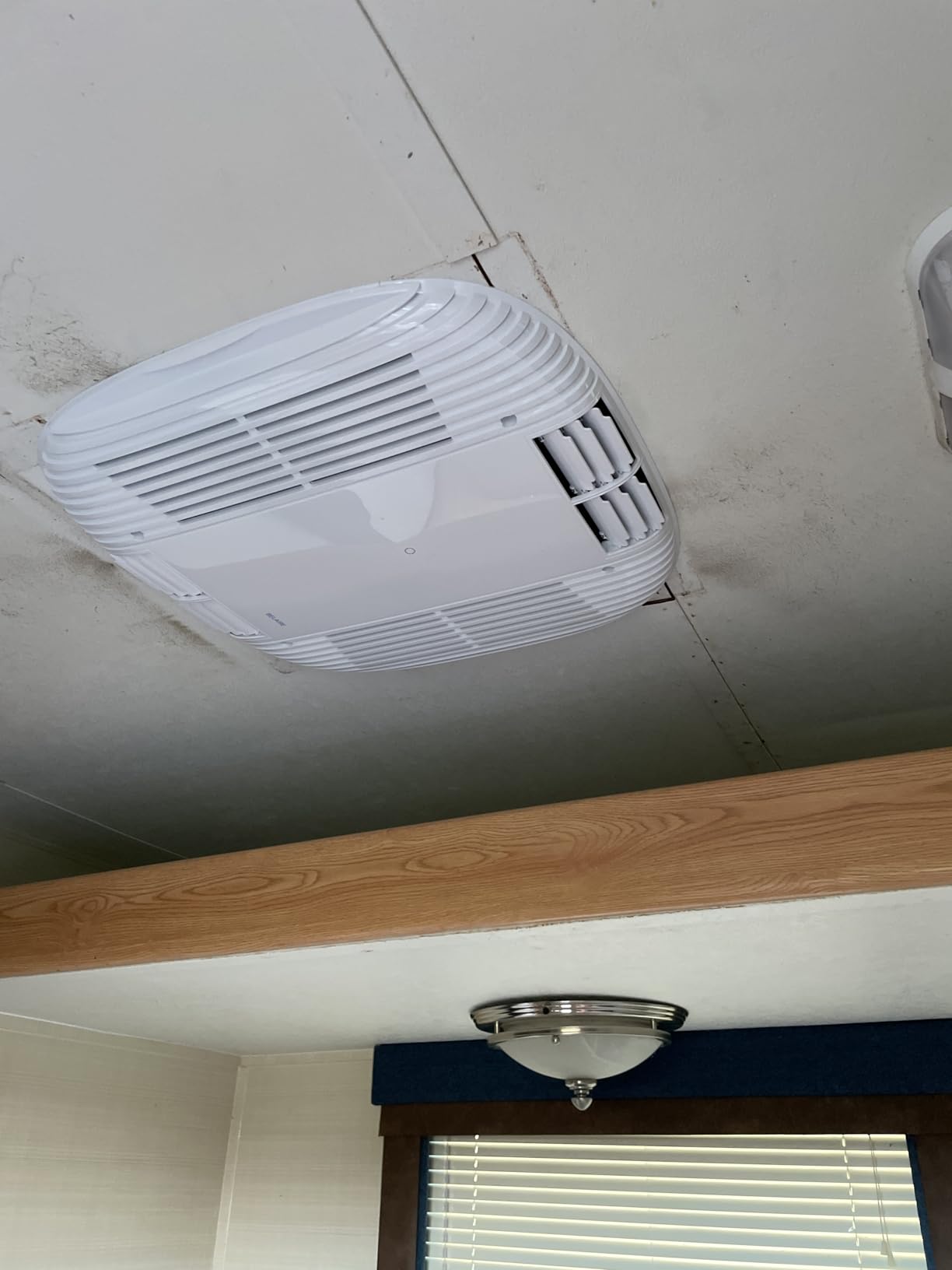
This review uses the product information, spec screenshots, and feature images supplied for the RecPro 15K. I’ll cover the numbers, but I’ll also call out the technician stuff buyers usually discover too late: the 14-inch roof opening, the remote line-of-sight, the plenum fit, the heat pump limits, and why a quiet AC is often more about vibration control than marketing copy.
Quick Verdict
The RecPro RV Air Conditioner 15K makes sense if you want a rooftop AC that can handle summer cooling and still be useful during shoulder-season camping. The built-in heat pump is the biggest reason I would pick it over a basic cooling-only unit. A heat strip just glows red and burns watts. A reverse-cycle heat pump moves heat, which is a better approach when the outside temperature is cool but not brutally cold.
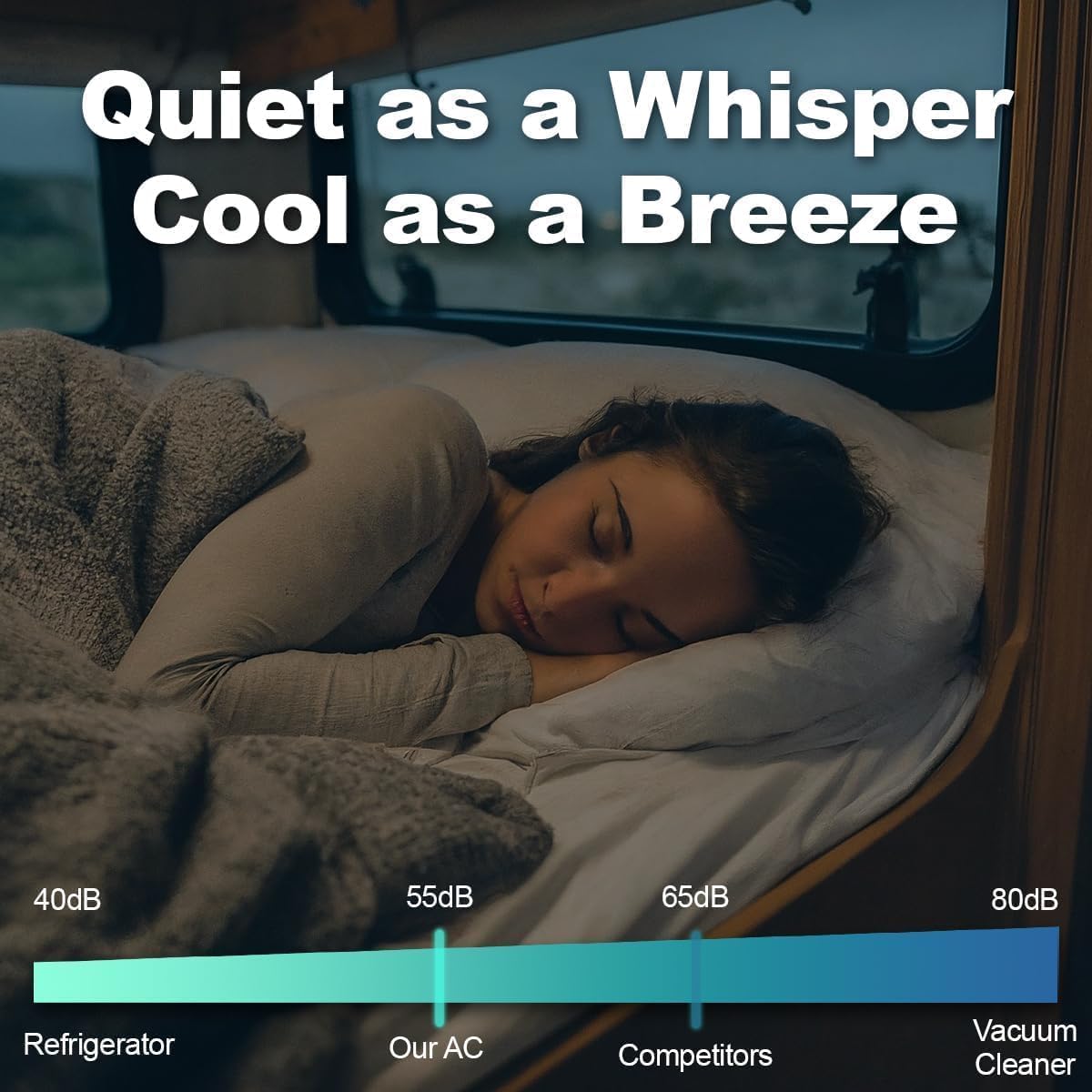
The other reason to pay attention is noise. The product materials list 59.1 dB, and some graphics show a lower “our AC” mark around 55 dB. I would not treat those two numbers as the same test result. What I do like is that RecPro is clearly aiming this model at people who hate sleeping under a roaring ceiling unit.
My short take: this is a practical 15K rooftop AC for RV owners who want cooling, supplemental heat, remote control, and a simpler non-ducted style package. It is not the right answer if you need a furnace replacement for freezing weather, a 12V DC off-grid AC, or a guaranteed drop-in match for every existing ducted thermostat system.
Key Specifications
Here are the supplied specs that matter before you start comparing this unit against Dometic, Coleman, Furrion, or cheaper no-name RV air conditioners.
| Feature | RecPro RV Air Conditioner 15K Details |
|---|---|
| Model number | RP-AC3800 |
| Power supply | 115V / 60Hz |
| Rated cooling capacity | 15,000 BTU/H |
| Rated heating capacity | 15,000 BTU/H |
| Cooling input | 1500W |
| Heating input | 1300W |
| Running amps for cooling | 14 Amp |
| Running amps for heating | 12 Amp |
| Maximum power input | 1750W |
| Maximum amp draw | 16 Amps |
| Startup amp draw | 16 Amps |
| Refrigerant charged | R410A / 650g |
| Energy efficiency rating | 10.27 ducted, 8.57 non-ducted |
| Maximum airflow | 341 CFM |
| Installation hole size | 14 3/16 in. x 14 3/16 in. |
| Listed noise | 59.1 dB |
| Filter type | Screen filter |
| Included components | Exterior shroud, interior plenum |
| Warranty shown | 1 year manufacturer |

The numbers I would circle first
The 1500W cooling input and 14-amp running draw are the numbers I would check before the BTU rating. A lot of buyers start with “15K” and stop there. That is not enough. If you have a 30-amp RV, the AC is only one of several loads. Your converter, water heater, microwave, fridge, and outlets can all compete for that same service.
The 16-amp startup draw is also worth noting. Many older rooftop units hit hard when the compressor starts. If this RecPro behaves close to the supplied number, it should be easier to live with on a properly sized generator or shore-power setup. I would still leave margin. Do not size a generator right at the edge and expect happy results in 100°F heat at elevation.

First Impressions
The RecPro 15K has a simple rounded shroud, available in white or black in the supplied images. White is the safer choice for most RV roofs because it reflects heat better. Black looks sharp on certain rigs, but if you camp in direct sun across Arizona, Texas, Nevada, or inland California, I would choose function over style.
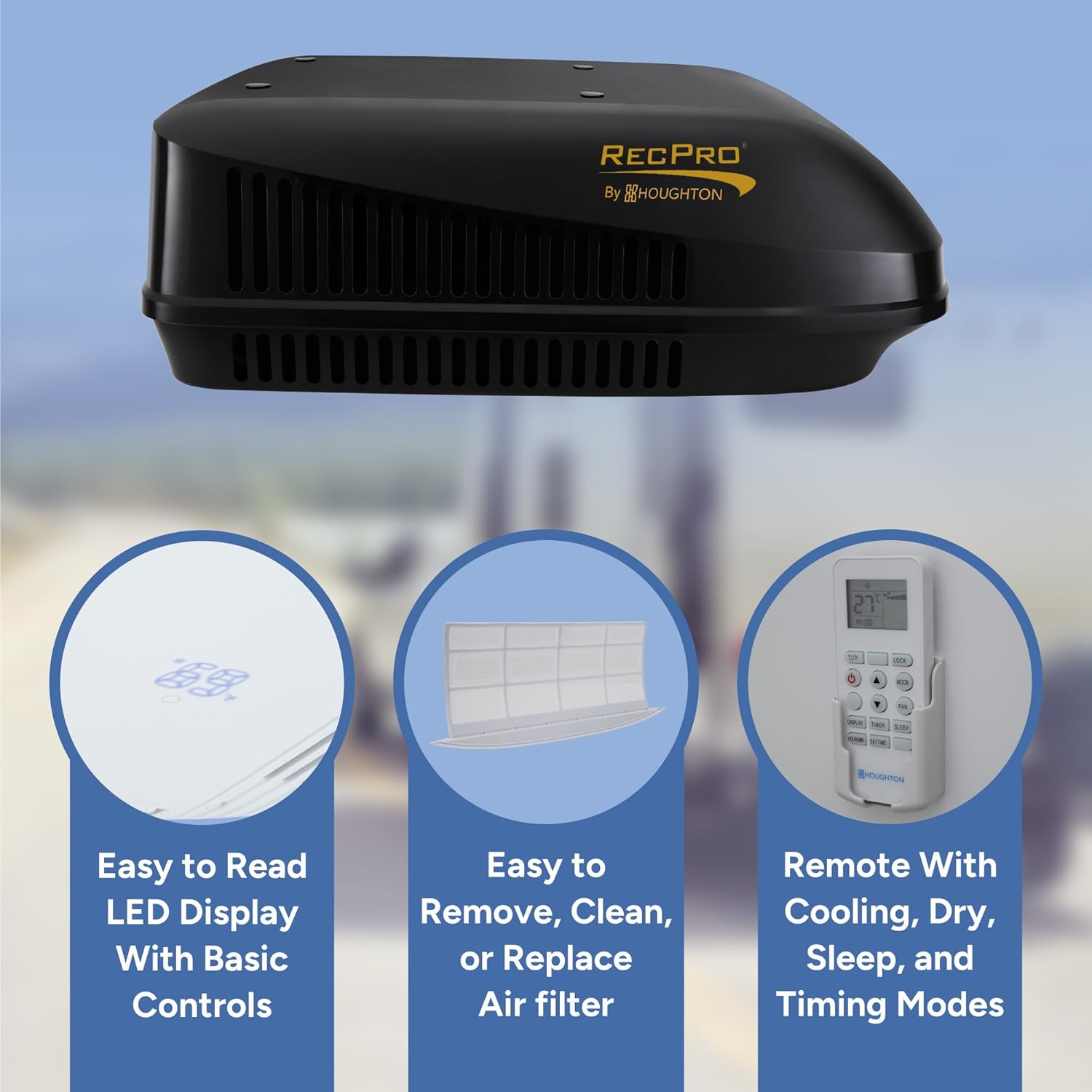
The shroud looks plain in a good way. No strange fins, no fragile-looking trim, no oversized styling that makes the unit harder to clean around. Rooftop ACs live a hard life: UV, rain, tree limbs, hail, road vibration, and owners climbing around with wash brushes. Fancy plastic usually ages worse than simple plastic.
Check Price on Amazon: RecPro RV Air Conditioner 15K
Mike’s bench note on the shroud
In a field teardown, the plastic shroud on the RecPro feels more substantial than the thin generic replacement covers I see on budget units. I would not call that a lab measurement, but the hand test matters. A flimsy shroud can buzz, flex, and pass vibration down into the ceiling assembly. A stiffer cover helps the unit feel quieter even when the compressor and fan are doing the same amount of work.
That is the part many shoppers miss. Noise is not just a decibel number. It is fan tone, compressor vibration, plenum rattle, roof framing, gasket compression, and whether the shroud resonates like a drum.
Setup and Daily Use
The installation graphic makes the job look clean: secure the AC unit to the roof, connect power, then install the plenum. That is the right basic sequence. Real RVs add wrinkles.

If the old unit has been on the roof for years, expect old gasket residue, dirty framing, uneven screw tension, and maybe a soft spot near the opening if there was ever a leak. Do not rush the roof prep. A brand-new AC on a poorly cleaned or uneven opening can leak, vibrate, or pull return air from the wrong place.
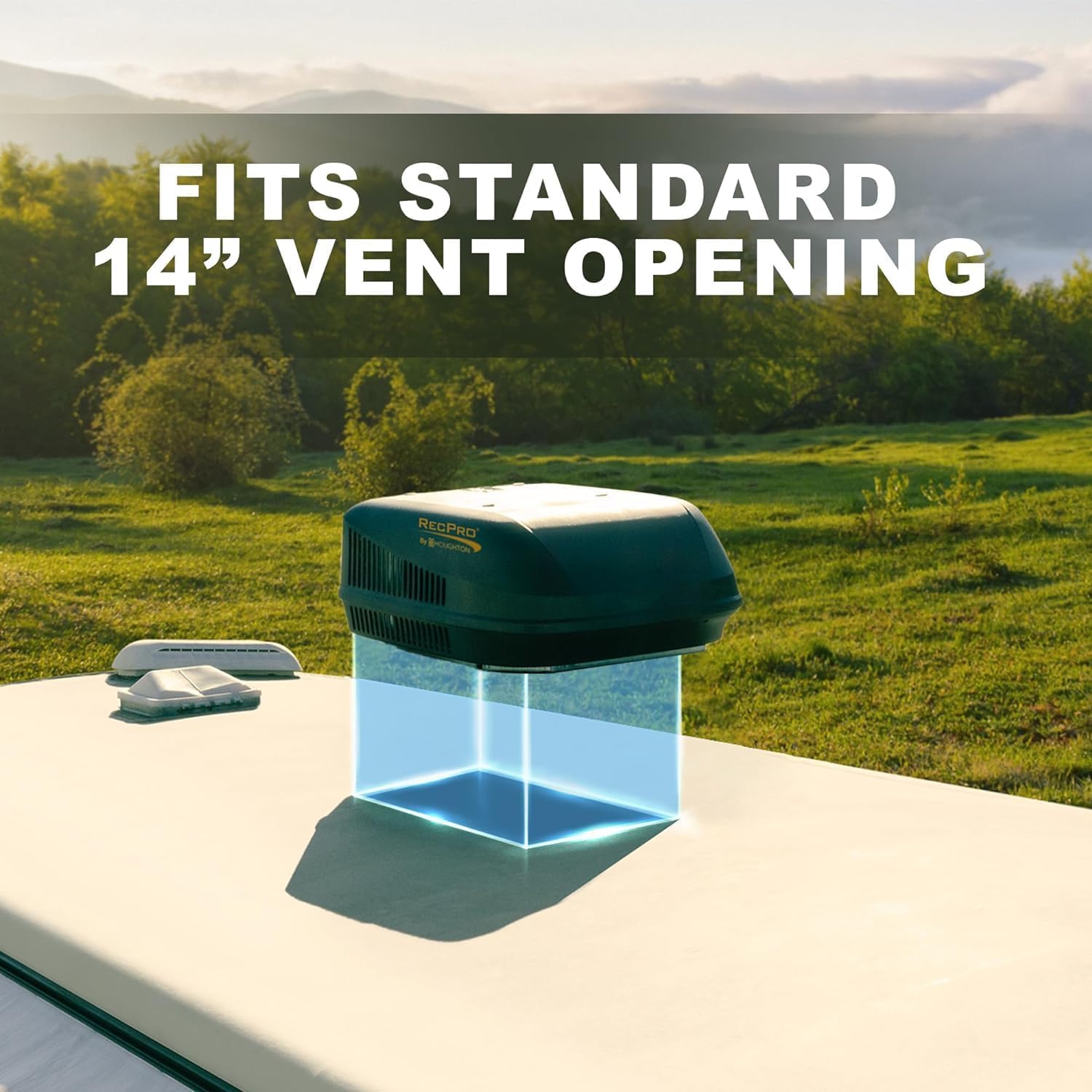
The supplied image says this unit fits a standard 14-inch vent opening. The spec table lists the installation hole as 14 3/16 inches by 14 3/16 inches. That is close to the common RV roof opening, but I still measure before ordering. I have seen “standard” openings that were chewed up by previous installs, widened badly, or framed out of square.

Technician install tip
The “no thermostat wiring needed” claim is a nice win for DIY owners, but it changes where you need to think. Since the controls are on the unit and remote, make sure your bed, cabinet face, bunk wall, or curtain track is not blocking the remote’s line-of-sight to the LED panel.
Also, do not force a tight 14 3/16-inch opening. If the roof framing is out of square, tightening the bolts will not magically fix it. Square the opening, clean the mating surface, and compress the gasket evenly. Too loose can leak. Too tight can deform the gasket and cause the same problem later.
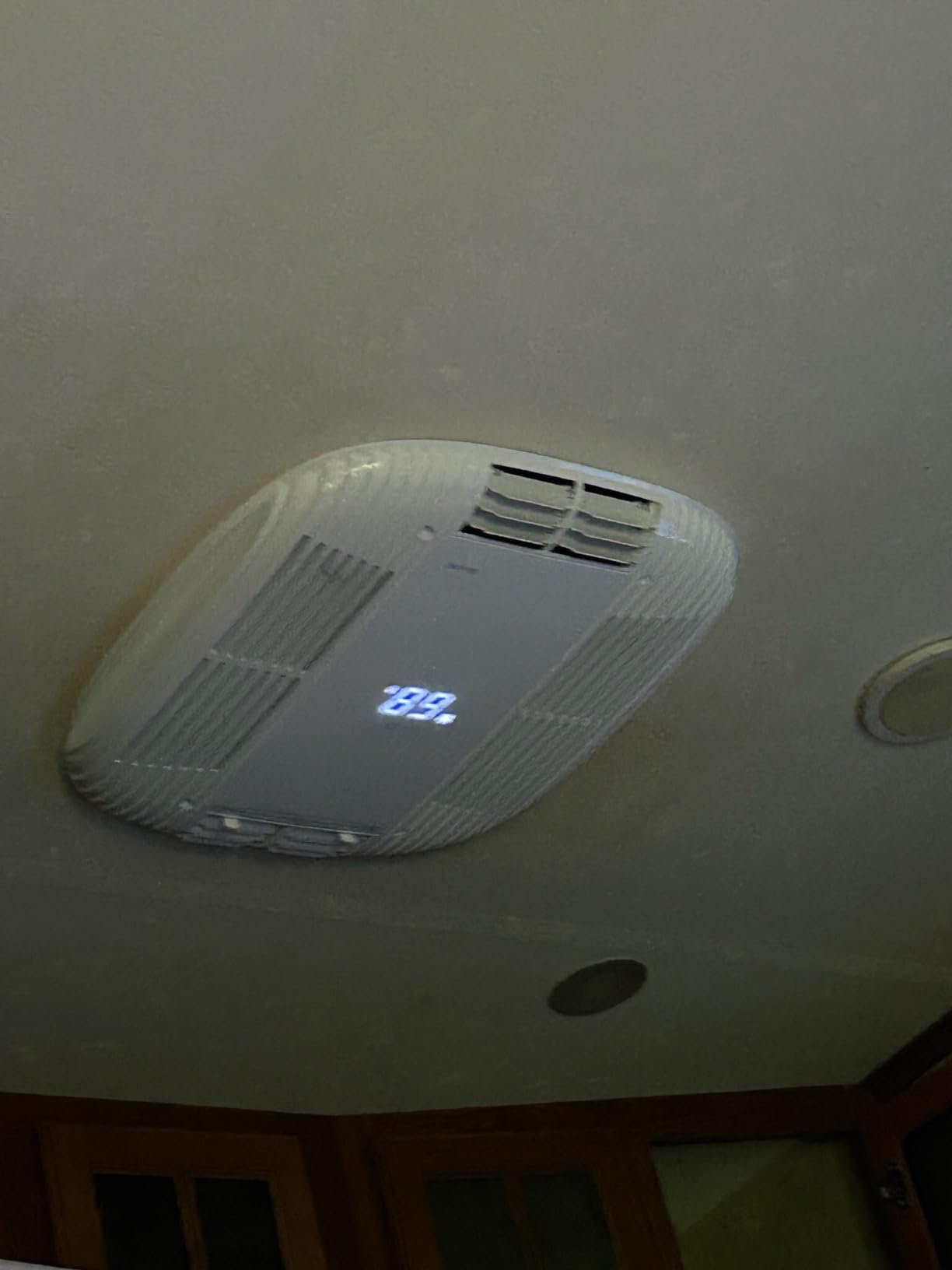
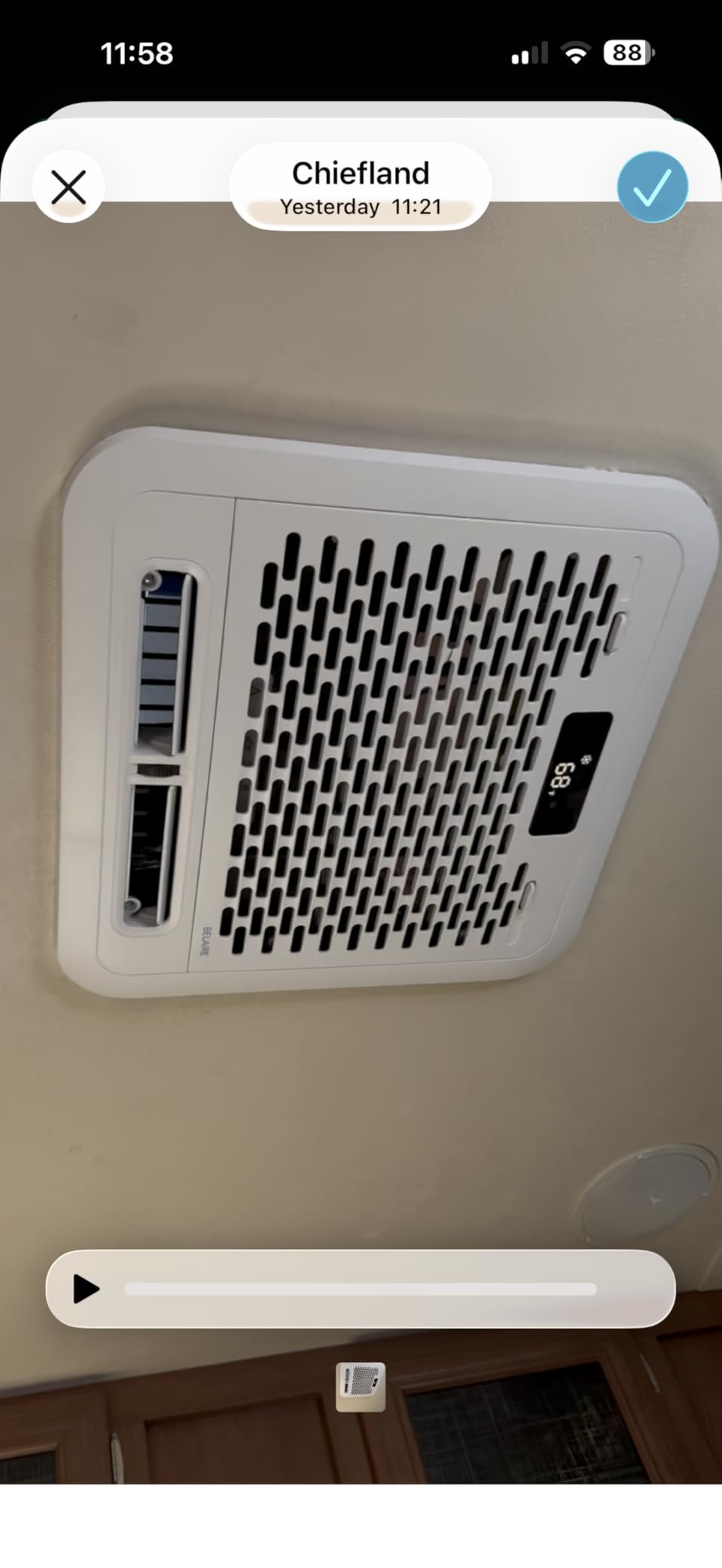
Daily use should be simple. The remote appears to cover cool, dry, fan, sleep, and timer modes. The LED display is easy to read from inside the camper. For a non-ducted install, that is exactly what most owners want: no wall thermostat drama, no fishing wires, no confusing control board swap.
Thermal Performance & Airflow Test
The old “Cleaning Performance” label does not belong in an RV air conditioner review. What matters here is thermal performance: how fast the unit pulls heat out, how much air it moves, how steady the cabin feels, and whether the heat pump earns its place.
The RecPro is rated at 15,000 BTU/H for cooling and 15,000 BTU/H for heating. The maximum airflow is listed at 341 CFM. Those are useful numbers, but an RV roof unit does not work in a clean test box once it is installed. It works in a small rolling cabin with hot walls, weak insulation, dusty filters, leaky slide seals, and people opening the door every five minutes.
Cooling performance
A 15K rooftop unit is a good size for many travel trailers, fifth wheels, small motorhomes, and food trucks. If you are replacing a tired 13.5K unit, the RecPro should feel like an upgrade, assuming the rest of the system is not choking airflow.
The most common mistake I see is blaming the rooftop unit when the problem is inside the ceiling. Supply air leaks into the return side. Foam dividers are missing. Duct tape dries out and peels. Filters clog with pet hair and desert dust. The owner says, “This AC doesn’t cool,” but half the cold air is short-circuiting before it reaches the living area.
Before judging any new 15K AC, pull the interior trim and look at the air path. If cold supply air and warm return air are mixing inside the plenum, fix that first.
Heat pump advantage
The heat pump is the feature that makes this RecPro more useful than a plain cooling-only rooftop unit. The supplied materials say it uses an efficient heat pump rather than a heat strip. That is the right design for shoulder-season camping.
A heat strip is simple, but it is not elegant. It creates resistance heat and pushes air across it. A heat pump works differently. It moves heat through the refrigerant cycle. In mild cool weather, that can give you comfortable cabin heat while drawing less power than a basic electric strip setup.
The spec table lists 12 amps running for heating and 1300W input power for heating. Those numbers tell me this unit is meant for chilly mornings and cool evenings, not deep winter survival. If you are camping around the mid-40s and want to hold the interior around a comfortable sleeping temperature, this is exactly where a rooftop heat pump makes sense. If the forecast is freezing, I still want a furnace or another real cold-weather heat source ready.
Noise, Vibration, and Cabin Comfort
RecPro markets this unit as quiet, and the materials show 59.1 dB at the highest setting. Another graphic places “our AC” around 55 dB on a scale. I would use the 59.1 dB product-info number as the safer reference and treat the graphic as general positioning.
What matters is how the noise lands inside the RV. A low hum is easy to sleep through. A sharp fan tone, plastic rattle, or compressor thump is not. Two units with the same decibel number can feel totally different at night.
Where quiet really comes from
In my experience, quiet RV AC performance comes from five places:
First, the shroud should not buzz. Second, the fan should be balanced. Third, the compressor mounts should damp vibration. Fourth, the gasket should be compressed evenly. Fifth, the plenum should not rattle against the ceiling.
The RecPro’s thicker-feeling shroud and included interior plenum help its case. But installation still decides the final result. If the roof opening is rough, the plenum is twisted, or the bolts are uneven, even a quiet unit can sound cheap.
For light sleepers, I would use sleep mode at night and avoid mounting the unit directly over the bed unless the RV layout gives you no choice. A quiet rooftop AC is still overhead machinery.
Check Price on Amazon: RecPro RV Air Conditioner 15K
Controls, Modes, and Remote Use
This RecPro is not trying to be a Wi-Fi smart appliance, at least not from the supplied materials. Good. A rooftop AC does not need an app to be useful. It needs controls you can operate half asleep.
The LED panel gives you local control. The remote gives you control from the bed, dinette, or food truck counter. The available modes shown in the product images include cooling, dry, fan, sleep, and timer functions.
Dry mode is more useful than many people think. RVs collect humidity fast. Showers, cooking, wet clothes, pets, and rainy campgrounds can make the interior feel sticky even when the temperature is not terrible. A dry mode can make the cabin feel better without running the AC as aggressively as full cooling.
The timer mode is also practical. I like it for cooling down the camper before bed or shutting the unit down after the hottest part of the day. Simple controls tend to get used. Overcomplicated controls get ignored.
Battery Life, Power Draw, and Generator Use
This is a 115V AC rooftop unit, not a 12V DC battery-native air conditioner. That distinction matters. You can run it from an inverter only if your battery bank, inverter, wiring, and charging setup are sized for the job.
The supplied specs list 1500W input for cooling, 1300W for heating, 1750W maximum power input, 14 amps running for cooling, and 16 amps maximum draw. Those are not scary numbers for a properly wired RV, but they are still real loads.
On a 30-amp hookup, you have to manage the rest of the coach. The AC plus a microwave can be enough to cause trouble. Add a water heater on electric and a converter charging a low battery bank, and you are asking too much.
For generator use, I would not shop by the generator’s marketing wattage alone. Heat and elevation reduce generator output. A generator that feels fine in spring can struggle in July. Leave headroom.
Off-grid reality
The listing talks about low amp draw and off-grid, solar, or generator setups. That is fair as a general direction, but the math still matters. A 1500W cooling load can drain batteries quickly. If you want to run this from solar, you need a serious lithium setup, a properly sized inverter, and enough panel output to recover during the day.
For weekend campers, shore power or generator support is the more realistic path. For full-time off-grid users, calculate runtime before buying.
Maintenance and Serviceability
The removable screen filter is one of the best everyday features on this unit. It is not glamorous, but it matters. A dirty filter hurts airflow, raises noise, reduces cooling, and can contribute to icing.
Clean the filter more often than you think. If you camp with dogs, drive dusty roads, cook inside, or spend time in pollen-heavy areas, check it weekly during heavy use.
The roof side needs attention too. Inspect the shroud after travel. Look for cracks, loose fasteners, branch damage, and debris blocking airflow. Check the gasket area after hard rain. Water intrusion around an AC opening can ruin roof framing before you notice stains inside.
If cooling drops, start simple. Filter, plenum seal, return-air separation, supply vents, and breaker voltage should be checked before assuming the sealed refrigerant system has a problem.
What I Like
I like that this unit includes both cooling and heat pump heating. That makes it more useful for real camping seasons, not just July afternoons.
I like the local LED controls and remote. No thermostat wiring is a genuine advantage for many DIY installs, especially in enclosed trailers, food trucks, smaller campers, and simple non-ducted layouts.
I like the standard roof opening fit. A 14-inch style opening keeps the installation within familiar RV territory.
I like the listed 341 CFM airflow. Airflow is not everything, but weak airflow makes even a high-BTU unit feel lazy.
I also like that the product information lists the exterior shroud and interior plenum as included components. Missing ceiling assemblies are one of the fastest ways to turn an AC order into a headache.
What Could Be Better
The ducted and non-ducted wording needs careful reading. The screenshot title shows a non-ducted white unit, while some product language mentions ducted and non-ducted compatibility. Buyers should not guess here. Choose the exact version that matches the RV.
The noise numbers are not perfectly consistent across the supplied images. The product information lists 59.1 dB, while another graphic suggests 55.4 dB. That does not ruin the product, but RecPro should make the test condition clearer.
The heat pump should also come with plain temperature guidance. Buyers need to know when it performs well and when they should switch to a furnace.
The one-year manufacturer warranty shown in the product details is not especially generous for a rooftop appliance. Check the seller page for exact warranty terms before buying.
Who Should Buy It
Buy the RecPro RV Air Conditioner 15K if you want a quieter rooftop AC with a built-in heat pump and easy interior controls.
It is a good fit for travel trailers, fifth wheels, food trucks, enclosed trailers, and motorhomes that need a 115V rooftop unit and have a compatible roof opening.
It is also a good option if you want a non-ducted install with a ceiling plenum, LED display, and remote control instead of a wall thermostat project.
Shoulder-season campers will get the most value from the heat pump. If you camp in spring and fall, not just peak summer, this unit earns more of its roof space.
Who Should Skip It
Skip it if you need a primary heater for freezing conditions. A heat pump is useful, but it is not the same as a furnace in deep cold.
Skip it if you need a true 12V DC air conditioner for direct battery operation. This is a 115V unit.
Skip it if you are not willing to confirm ducted versus non-ducted compatibility. Ordering the wrong configuration is an expensive mistake.
You may also want to skip it if your RV roof is soft, damaged, crowded with solar panels, or has an unusual opening. Measure and inspect first.
Buying Advice
Comparing this against the Furrion Chill Cube 18K and Gidrox 12V DC? Our Best RV Air Conditioner 2026 Buyer’s Guide puts all three options side-by-side with a recommendation matrix by RV type.
Before buying, confirm four things: roof opening size, power supply, ducted or non-ducted configuration, and what parts are included.
At the time of writing, pricing may change. Check the current price on Amazon and compare the full installed cost, not just the product price. Sealant, tools, lift help, replacement framing, or professional labor can change the real cost.
If you are replacing an older AC, take photos before removing anything. Photograph the roof unit, interior ceiling assembly, wiring, gasket area, and roof opening. Those pictures help if you need to confirm fitment with the seller or an RV technician.
For DIY installation, do not rush. Clean the roof surface, square the opening, protect the membrane, tighten evenly, and verify that supply and return air are separated inside the plenum.
Check the current RecPro 15K price on Amazon
Final Verdict
The RecPro RV Air Conditioner 15K is a strong candidate if you want a practical rooftop AC with quiet cooling, a usable heat pump, remote control, and a standard-style installation path. Its best features are not flashy. They are the things that matter after a long travel day: the cabin cools down, the unit does not roar all night, the remote works from bed, and the heat pump takes the edge off a cold morning.
I would not oversell it as a cure for every RV comfort problem. Poor insulation, dirty filters, bad duct sealing, and weak power setups can make any AC look worse than it is. But with a clean installation and the right expectations, the RecPro 15K looks like a sensible upgrade for campers who want one rooftop unit to handle both summer cooling and mild-weather heating.
For RV owners replacing a loud old 13.5K unit or building out a non-ducted setup, this one deserves a close look.
Check Price on Amazon: RecPro RV Air Conditioner 15K
FAQ
Is the RecPro RV Air Conditioner 15K ducted or non-ducted?
The supplied materials mention both ducted and non-ducted compatibility, while the Amazon screenshot shows a non-ducted white version. Check the exact listing before buying. The configuration matters.
Does the RecPro 15K have a real heat pump?
Yes, the supplied product information lists a built-in heat pump and 15,000 BTU/H heating capacity. Use it as supplemental heat for cool conditions, not as your only heat source for freezing nights.
How loud is the RecPro RV Air Conditioner 15K?
The product information lists 59.1 dB. Some graphics show a lower comparison mark. Real cabin noise depends on installation quality, fan speed, roof structure, gasket compression, and plenum fit.
What size roof opening does it need?
The supplied spec table lists an installation hole size of 14 3/16 inches by 14 3/16 inches, and the feature graphic says it fits a standard 14-inch vent opening. Measure your RV before ordering.
Can the RecPro 15K run on a generator?
Yes, if the generator is properly sized. The supplied specs list 1500W input for cooling and 1750W maximum power input. Leave extra headroom for heat, elevation, startup behavior, battery charging, and other appliances.
Is this a good replacement for a 13.5K BTU RV AC?
It can be, especially if your current unit struggles in summer or is too loud at night. Confirm roof fit, wiring, ducted or non-ducted configuration, and ceiling plenum compatibility first.
Does it include a remote control?
Yes, the supplied images show a wireless remote and LED control panel. The remote appears to support cooling, dry, fan, sleep, and timer modes.
How often should I clean the filter?
During heavy use, check it weekly. Clean it more often if you camp with pets, cook inside, travel dusty roads, or park in high-pollen areas. A dirty filter can reduce cooling and make the unit louder.