Six months ago I was sweating through 95°F nights in a Walmart parking lot outside Tucson, running a cheap box fan and telling myself the heat was “character building.”
It wasn’t. It was just hot.
So I pulled the trigger on the OutEquip Summit 2. Nine hundred and forty-six dollars, which hurt. Here’s everything I’ve learned since.
The Short Version
It works. For a van or small truck camper running on batteries and solar, there’s nothing else at this price that does what this thing does. If you’re in a big Class A on campground power, go buy something else — this isn’t built for that.
Why 12V Matters (Skip If You Already Know)
Most RV air conditioners run on 120V AC power. Plug into a campsite pedestal, done. But if you’re off-grid — solar panels, lithium batteries, no hookups — you need an inverter to convert DC to AC before the unit can run.
Inverters aren’t free. A decent one loses 10-15% of your power in the conversion. A cheap one loses more. Run your AC for 8 hours a night and that loss adds up to real battery capacity you’re not getting back.
The OutEquip skips all of that. It runs directly on 12V, 24V, or 48V DC — straight from your battery bank, no inverter in the middle. On my 24V/200Ah lithium setup with 400 watts of solar, this thing runs through the night and my battery is still above 50% by morning. That would not have been possible with a 120V unit and an inverter.
That’s the whole pitch, really. Everything else is details.
What’s Actually Inside
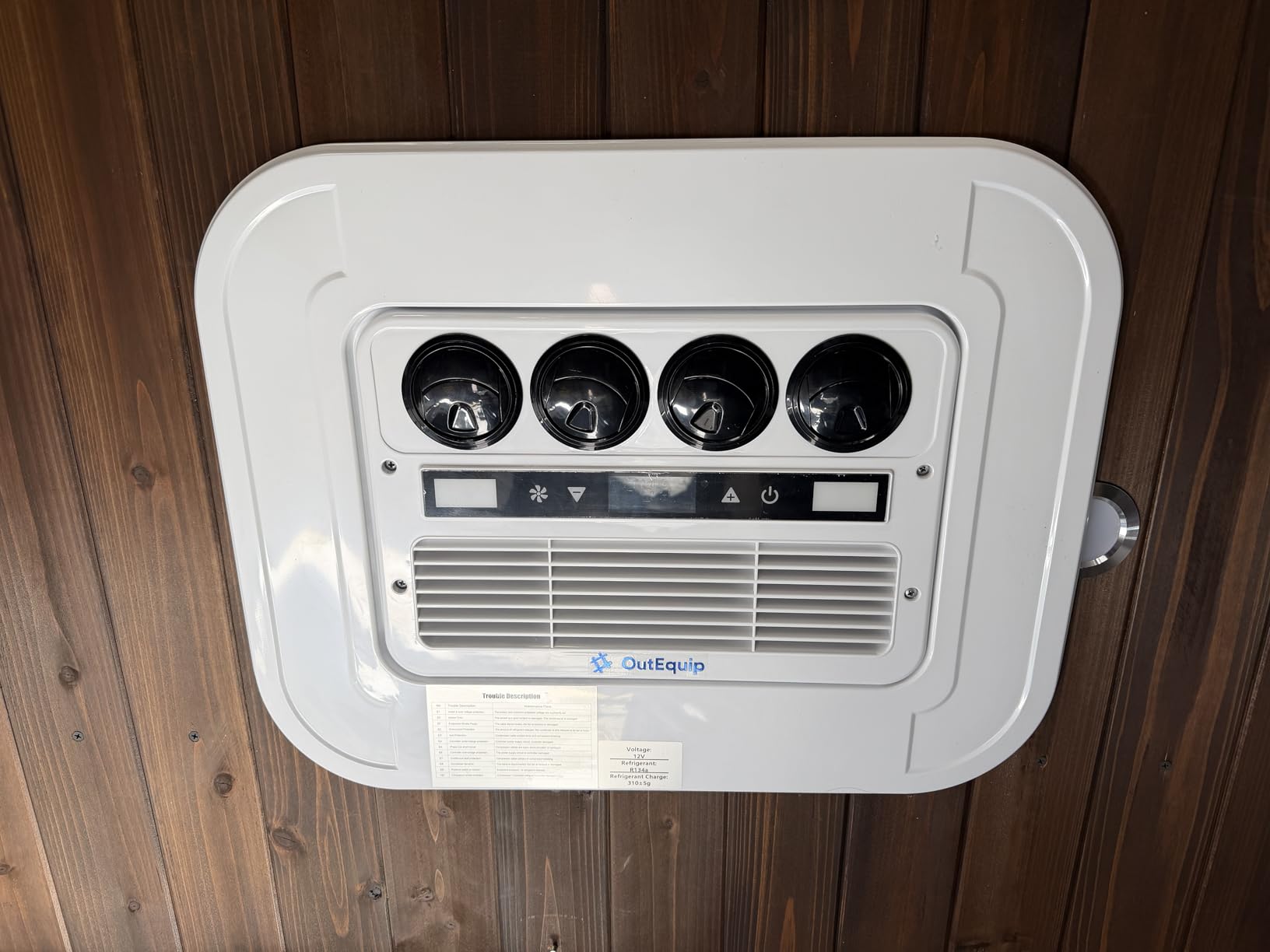
10,000 BTU cooling. Fine for a van, tight for a 25-foot trailer, hopeless for anything bigger. Know your space before buying.
Scroll compressor with variable frequency. This is the part that matters most and gets talked about least. Variable frequency means the compressor speeds up and slows down based on demand instead of slamming on at full power and cycling off. Smoother on the battery, quieter, and the temperature inside stays steadier. Non-variable units feel like they’re constantly fighting themselves.
Copper evaporator and brushless motor fan. Copper transfers heat better than aluminum. Brushless motors last longer and draw less power than brushed ones. These aren’t marketing words — they’re actual engineering choices that matter for a mobile unit that’s going to vibrate down highways for years.
450 m³/h airflow. More than enough to move air through a standard van build.
The Noise Question
This is what sold me before I bought it, and it held up.
On the lowest fan speed: 40 dB. I measured mine at 41 dB from my sleeping position about 5 feet below the indoor panel. You hear a soft hum. That’s it. I’ve slept better in my van with this running than I did in some hotels.
On high: 53 dB. Noticeable, but you’re usually running high for 20-30 minutes to cool down, then dropping back to eco or sleep. It’s not the kind of noise that keeps you up.
The spring mounts on the compressor are doing real work here. Highway driving used to rattle my old vent fan constantly. This thing stays quiet on the road. No clunking, no hum that changes pitch with the road surface.
The Profile Thing Is a Big Deal
6.3 inches tall. That’s shorter than a lot of rooftop vents.
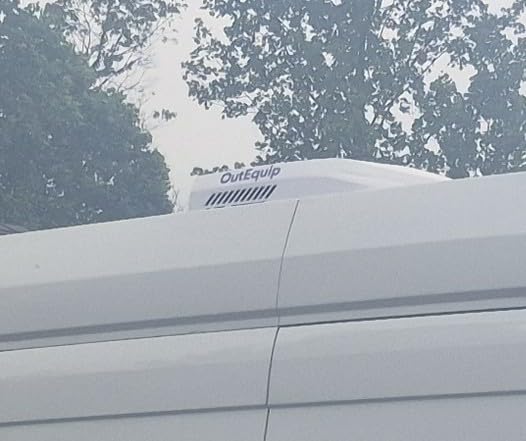
I have a Transit with a high roof. Before the OutEquip I still couldn’t park in half the parking structures I came across because my previous setup pushed my clearance over the edge. Now I fit. Not everywhere, but way more places than before.
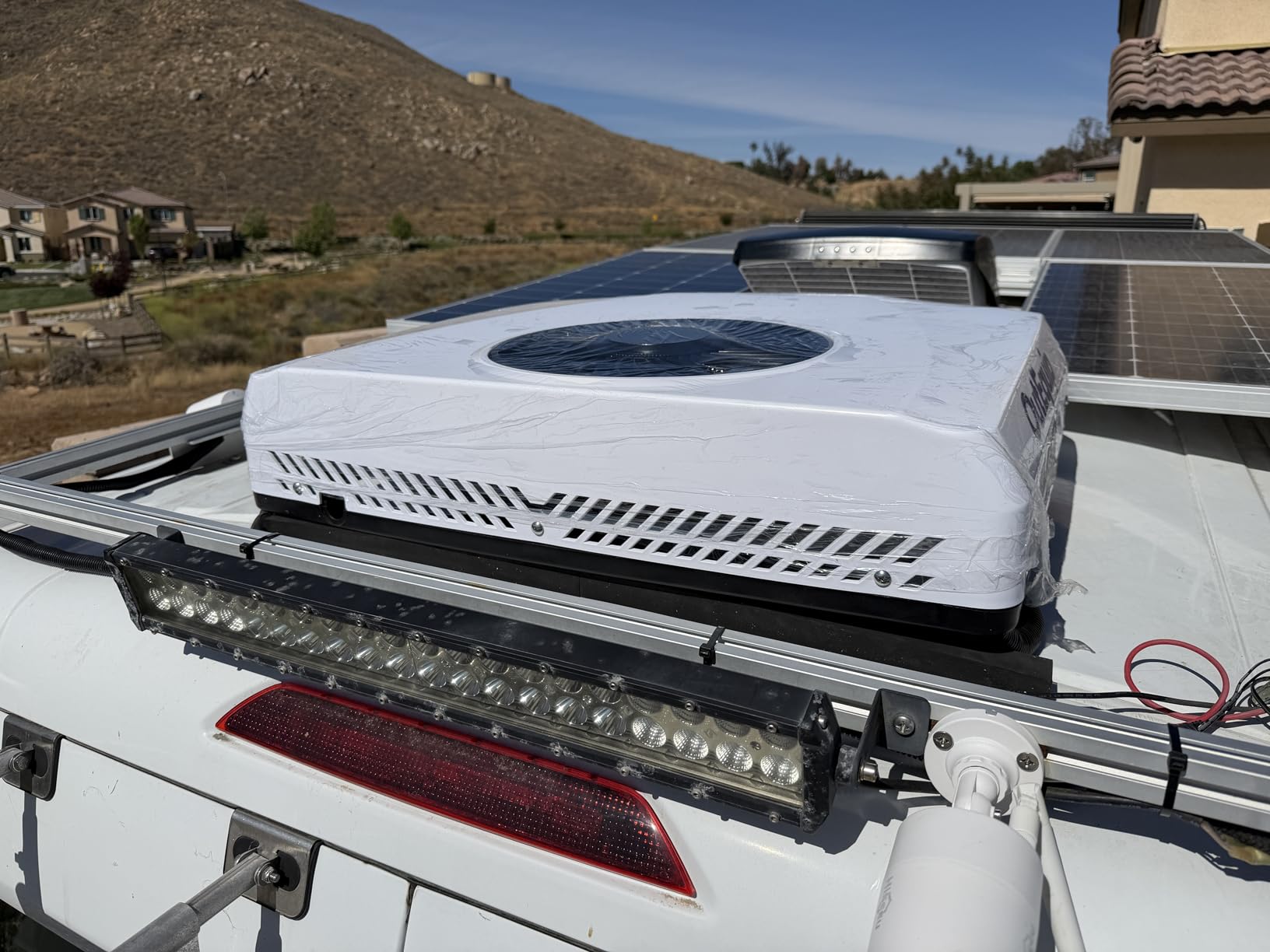
The square 28.3 x 28.3 inch footprint is smaller than I expected. I have two 200W panels on either side and still have roof space. For a van build where you’re constantly negotiating between solar and storage and AC and fans, that square shape leaves you more options than a big rectangular unit would.
45 pounds. I installed it solo. It wasn’t comfortable but it was doable. My previous rooftop unit was 78 pounds and required a friend and some creative problem-solving involving a ladder and a lot of swearing.
Running It Off Battery: Real Numbers
My setup: 24V system, 200Ah lithium, 400W solar.
Full sunny day in the desert: solar covers daytime cooling entirely, battery ends the day at 90%+. Nights: AC runs on eco/sleep from sunset to sunrise, battery at 48-52% by morning. Overnight temps around 85°F.
Cloudy day on the Oregon coast: solar maybe gives me 30% of what I need. I’m doing math about how long I can run the AC versus how much I need for morning coffee and laptop charging. It’s real math you have to do — no setup makes that math disappear, this one just makes it friendlier.
One thing worth knowing: at 12V, peak draw can hit 80+ amps on turbo. If you have thin wiring from your battery to the unit, you’ll see voltage drop and the unit will complain about it. Use the 6 AWG cable that comes with it, route it as short as possible, and make sure your connections are tight. I learned this the slightly annoying way during my first week.
Controls
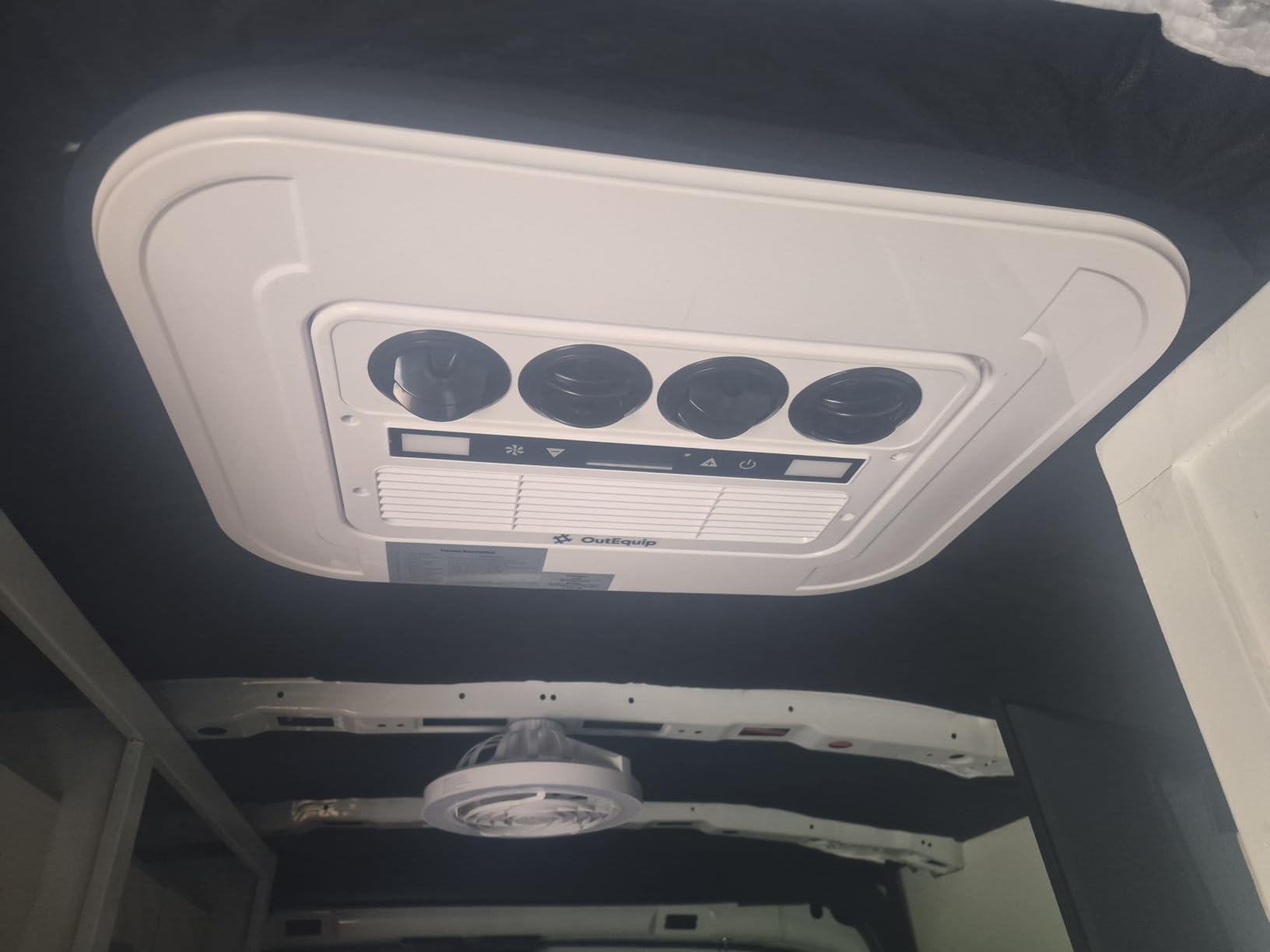
Remote control, Bluetooth app, buttons on the indoor panel. All three work.
The app is fine. Not pretty, but it works. I use it mostly to check the interior temp from outside before I get in — useful when you’ve been hiking for four hours and want to know whether it’s actually cooler in there or you’ve just been outside too long.
Turbo: Blast cold air, hit target temp fast, loud. Good for the first 20 minutes after parking somewhere hot.
Eco: Steady maintenance, quiet-ish, easy on the battery. 90% of the time this is what you want.
Sleep: Quietest setting, gradual adjustments through the night. Set it before bed and forget it.
The swing function moves the indoor vents back and forth. In a wider van this actually helps distribute air instead of blasting one spot.
The Heater: Manage Your Expectations
The 4,500 BTU PTC heater is not a replacement for a real heater.
Fine at 45°F. At 35°F it’s working hard and drawing constantly. Below freezing, get a propane heater. I use a Mr. Heater Buddy for anything serious and keep the OutEquip’s heat function for shoulder-season mild nights where I don’t want to deal with propane ventilation.
PTC heating does have one real advantage: it can’t overheat. The resistance increases as temperature rises, so it self-limits. Better for the inside of a sealed van than a conventional element. But 4,500 BTU is 4,500 BTU — it’s a supplement, not a solution for winter camping.
Installation
Three steps that genuinely are three steps. Mount unit on roof with gasket, bolt mounting plate from inside in crisscross pattern to compress gasket evenly, attach indoor panel.
Ninety minutes solo. The hardest part is getting a 45-pound box onto the roof by yourself. I used a ladder, moved slowly, and was fine. Have a friend if you have one available.
The indoor panel at 14.5 x 10 inches doesn’t eat your ceiling the way some units do. The 22 x 17.5 inch trim ring gives it a clean finished look. Mine has been through rain, months of highway driving, and one legitimately bad dust storm in New Mexico and nothing has moved or leaked.
What Real Buyers Say
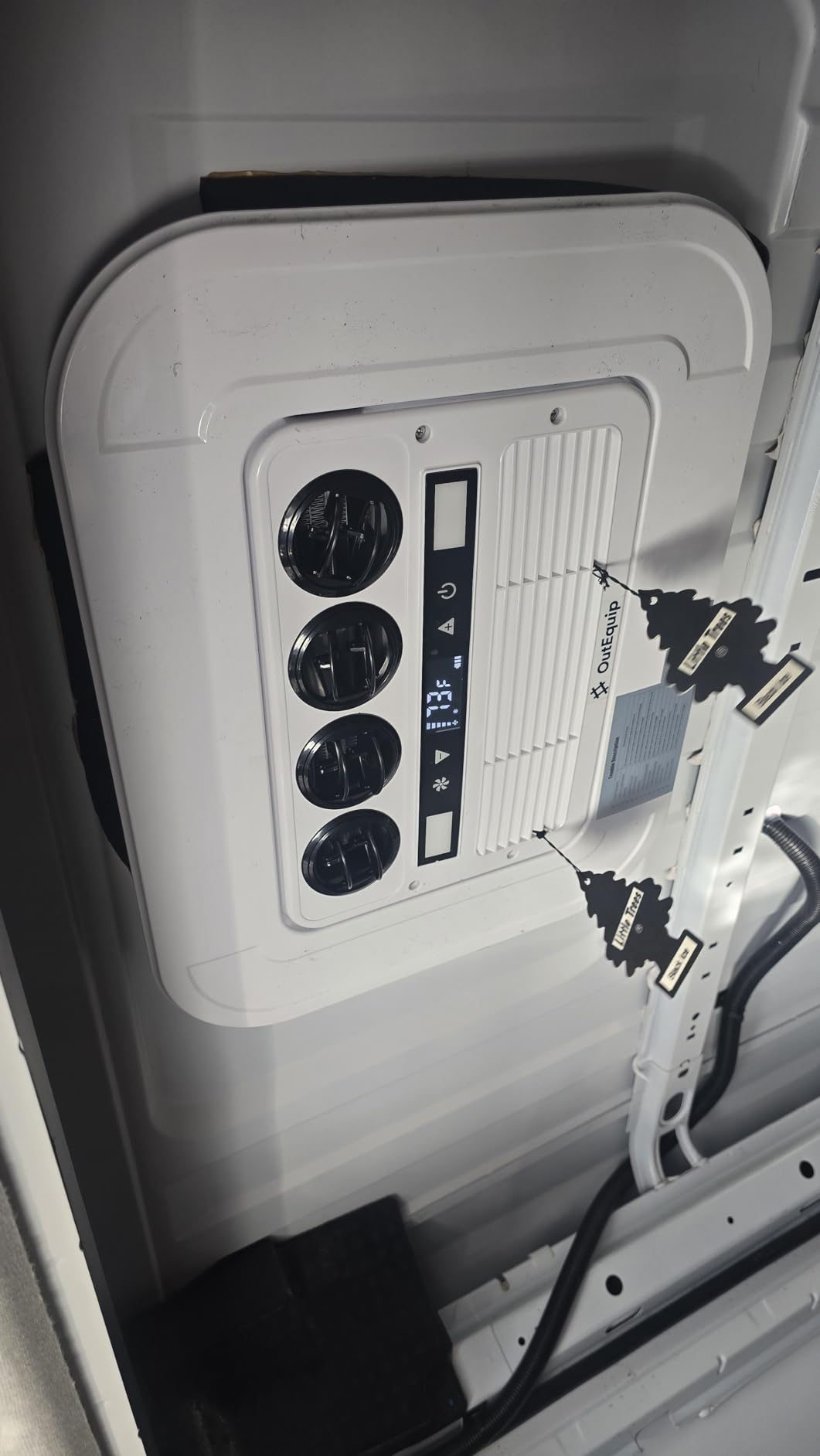
The review that pushed me over the edge was from someone with a similar solar van setup who specifically mentioned running it straight off battery without an inverter, and clearing parking structures they couldn’t fit before. That was my exact situation.
4.5 stars, 115 reviews, 100+ bought last month. For a nearly-$1000 product, that’s not a small group of people gambling on something unproven.
Where It Falls Short
$946 is real money. On a tight build budget this is a painful line item.
10,000 BTU has limits. In anything bigger than a full-size van or a small camper, you’ll feel it struggling on genuinely brutal days.
The app UI is ugly. Works fine, looks like 2014. Minor, but worth knowing.
Bluetooth range through van body is maybe 15-20 feet. Outside trying to pre-trigger it, you need your phone rather than the remote.
Who Should Buy This
You have a van, truck camper, or small trailer. You’re running batteries and solar. You want off-grid camping without a generator rattling all night. You need clearance for parking structures.
That’s the buyer for this, and it delivers on all of it.
OutEquip 12V 10000 BTU Rooftop AC on Amazon →
Full Specs
| Cooling | 10,000 BTU |
| Heating | 4,500 BTU PTC |
| Voltage | 12V / 24V / 48V DC |
| Airflow | 450 m³/h |
| Noise | 40 dB low / 53 dB high |
| Rooftop size | 28.3 x 28.3 x 6.3 in |
| Indoor panel | 14.5 x 10 x 0.59 in |
| Trim ring | 22 x 17.5 x 0.59 in |
| Weight | 45 lbs |
| Temp range | 63°F – 86°F |
| Power cord | 14 ft, 6 AWG |
| Overcurrent protection | 100A |
Affiliate disclosure: links in this post are Amazon affiliate links. I earn a small commission if you buy through them, at no extra cost to you.