So I finally pulled the trigger on the Gidrox 10000 BTU RV Air Conditioner with Heater back in late summer 2025, and now that I’ve ridden it through a full cooling season, a fall, and a chunk of winter boondocking in the high desert, I figure it’s time to write up what nobody else is telling you about this unit.
Quick disclaimer up front: I’m not sponsored by Gidrox. I bought this thing with my own money after my old Coleman finally gave up the ghost outside Moab. I picked the Gidrox because I needed something small enough for my 19-foot trailer, with a heat pump so I could ditch one of my two propane tanks, and priced under what a Dometic Penguin II would run me. Spoiler: it mostly works. There’s a couple of things that genuinely surprised me, and one thing that almost made me return it.
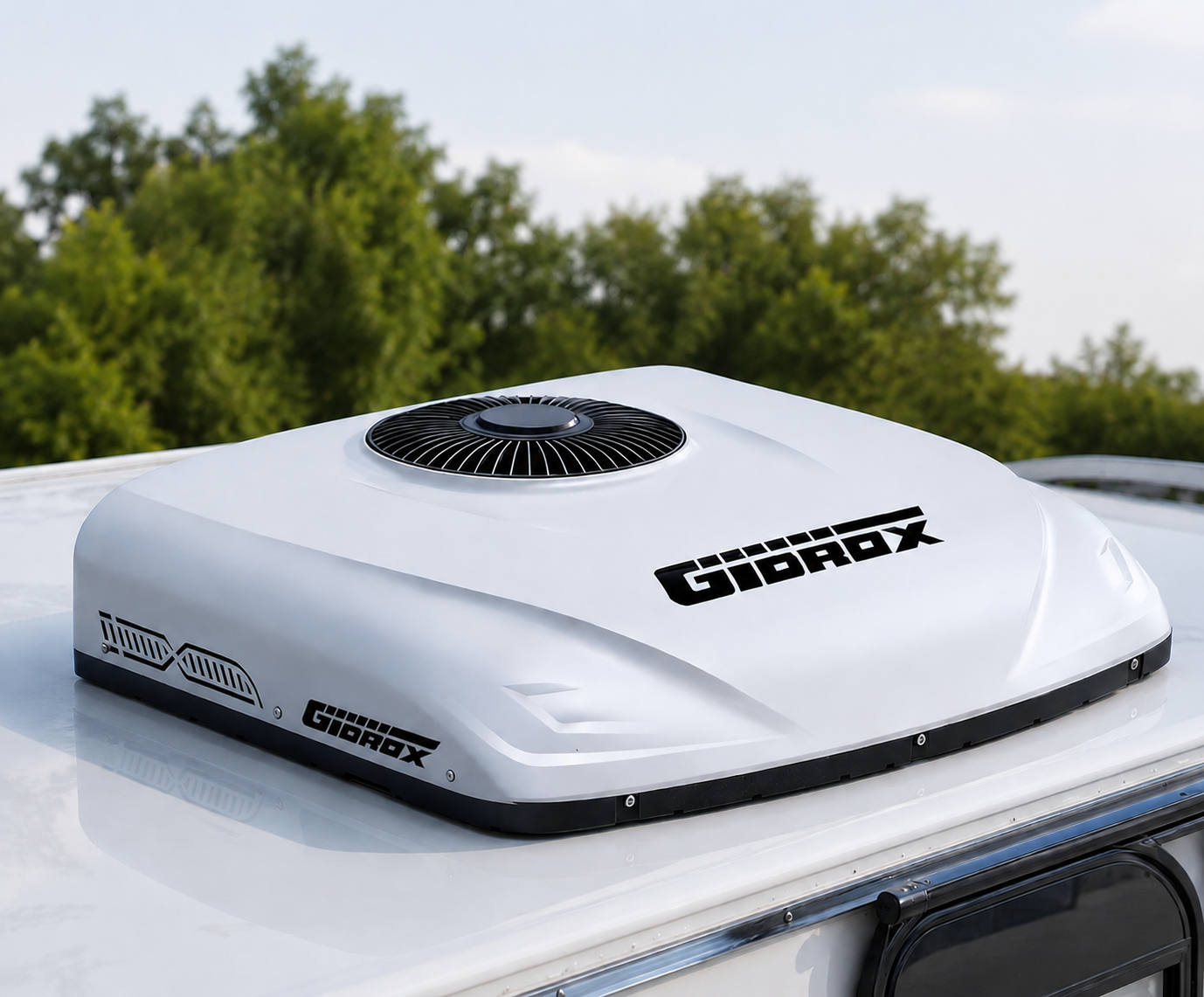
Table of Contents
Open Table of Contents
- Why I Picked the Gidrox 10000 BTU Over the Big Names
- The Numbers That Actually Matter
- What’s in the Box and Initial Impressions
- Installation: What the Manual Doesn’t Tell You
- Real-World Cooling Performance Across Three Climates
- Noise Levels: Can You Actually Sleep Through It?
- Power Draw and Off-Grid Compatibility
- Heat Pump Function: The Sleeper Feature Nobody Talks About
- Where the Gidrox 10000 BTU Falls Short
- How It Compares
- Who Should Buy This
- After Nine Months
- Related Reviews
- A Few Questions Worth Answering
- See Today’s Deal on Amazon
Why I Picked the Gidrox 10000 BTU Over the Big Names
Look, I’ve been wrenching on RVs since 2019. I’ve installed Dometic Brisks, replaced Coleman Mach 3s, helped a buddy mount a Furrion Chill Cube. I know the landscape. When my old unit died, I almost just ordered another Coleman out of habit. Then I saw the price on the Gidrox 10000 BTU on Amazon and did a double-take.
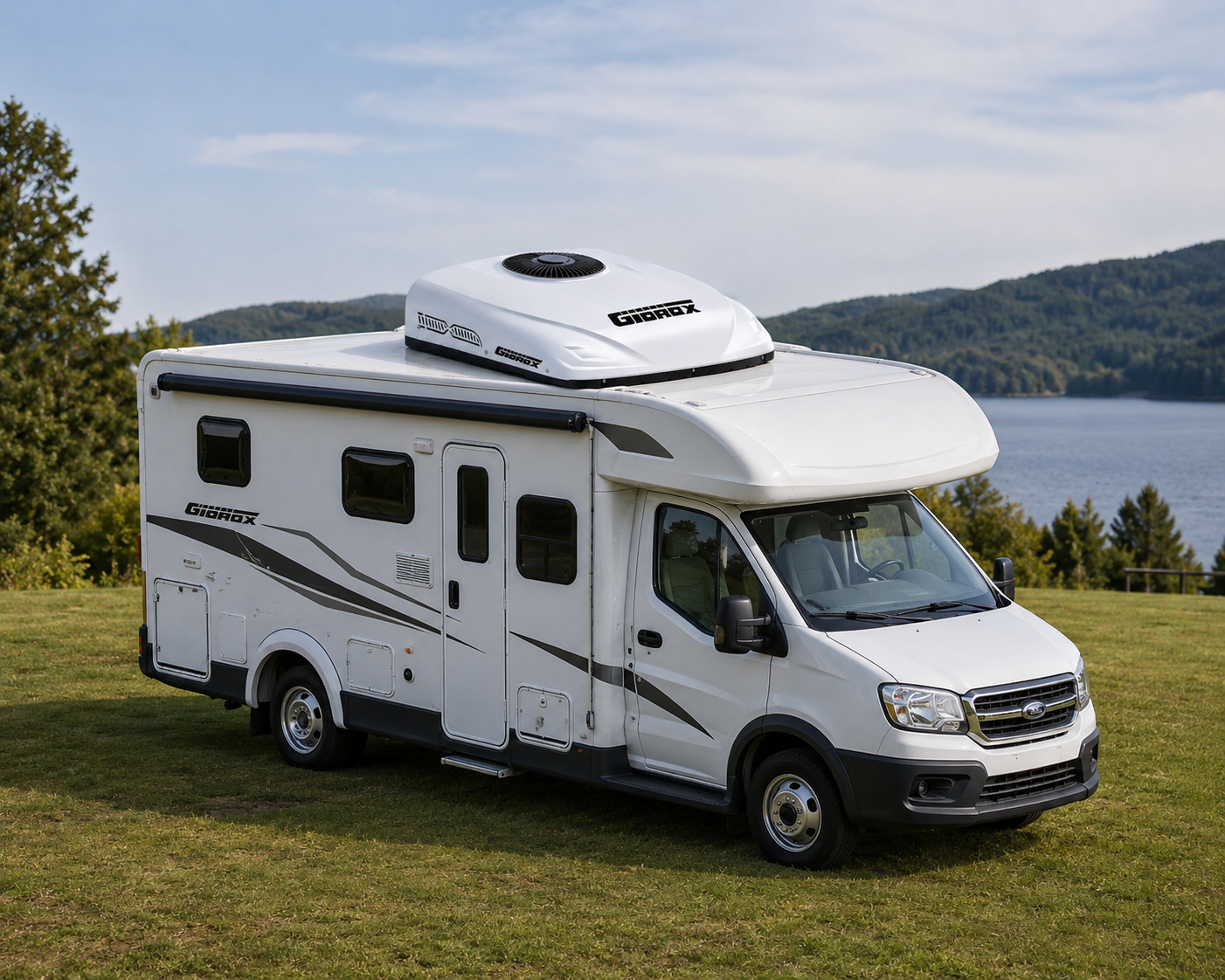
For my use case, 10000 BTU was the right call. My trailer is 19 feet, insulated, and I don’t park in Phoenix in July like an animal. Most of the year I’m somewhere between 4,000 and 8,000 feet of elevation, where the air is thinner and a 13.5K or 15K unit is genuinely overkill. The Gidrox sits in that sweet spot where it cools fast enough without absolutely murdering my batteries when I’m off-grid.
The heat pump feature was the actual deciding factor. Running a heat pump down to about 40°F outside means I’m not burning propane every single morning to take the chill off. For shoulder season camping, that’s huge. Propane in tourist towns is highway robbery, and I’m not driving 40 miles to find a cheap fill.
You can check the current price and availability on Amazon here. Prices have moved around a bit since I bought mine.
The Numbers That Actually Matter
I’m not going to copy-paste the marketing spec sheet at you. Here’s what I actually care about as someone who lives in this thing part-time:
Cooling: 10,000 BTU. In my 19-foot trailer with decent insulation, drops the cabin from 95°F to a livable 76°F in about 22 minutes on shore power. Faster if I close the bedroom slide and run a small fan to circulate.
Heating: The heat pump pushes about 9,500 BTU. Effective down to around 40°F ambient. Below that it’ll still run but the coils start icing and output drops. I switch to my Mr. Buddy below freezing.
Power draw: This is the one that surprised me. Pulls about 9.5 amps on startup, settles to roughly 7 amps running. Means I can run it on a 30 amp pedestal without choking out the microwave, which my old Coleman absolutely could not do.
Weight: Just under 75 pounds. I got it on the roof myself with a ladder and a pulley setup my neighbor rigged. Two people would be smarter. The Dometic Penguin II weighs about 90 pounds for reference.
Noise: Marketing says 56 dB on low. I measured 61 dB on low with my phone app, 68 dB on high, both taken from the bed about 8 feet from the unit. Real world, it’s noticeably quieter than the Coleman it replaced, but it’s not silent. You’ll hear it. You’ll get used to it.
Profile: About 9.5 inches tall on the roof. Helps with garages and low branches. Doesn’t drag the MPG down as much as a taller unit either.
What’s in the Box and Initial Impressions
Showed up in a single box, double-walled cardboard, foam corner blocks. No damage on mine, but I’ve heard from other folks on the that delivery can be rough. Inspect before you sign.
Inside you get the AC unit itself, the interior ceiling assembly (return air grille, controls, vents), gasket seal, hardware bag, and a remote. The manual is fine, not great. Translation is functional but reads like it was written by someone who’s never installed an RV AC. I leaned on YouTube heavily for the install.
What I noticed right away: build quality is better than I expected at this price point. The shroud is real ABS, not the brittle stuff. The fan blades feel balanced. The wiring harness is labeled in English. The compressor mount has actual rubber isolators, which the cheap Amazon units often skip.
What I didn’t love: the included sealing gasket is okay, not great. I replaced mine with a Dicor butyl tape setup for an extra $18 and slept better at night knowing it wasn’t going to leak in a hailstorm.
Installation: What the Manual Doesn’t Tell You
Installing the Gidrox on my trailer took me about 4 hours, including coffee breaks and one trip back to the hardware store. If you’ve never done a rooftop AC install, budget a full day and watch three or four YouTube videos first. If you’ve done one before, you know the drill.
A few things the manual glosses over:
The 14x14 inch standard RV roof opening fits this unit, but my trailer had the opening at 14.25 inches in one spot from sloppy factory work. I had to shim with butyl tape. Check your opening with a tape measure before you commit.
The included bolts are Phillips head and they will strip if you crank them. I swapped to stainless hex bolts. Cost me $4 at Ace.
The interior assembly drops down and connects via a wire harness with a connector. There’s a thermistor lead that’s easy to forget. If your unit cycles on and off rapidly after install, that’s the thermistor. Disconnect, reseat, done.
Roof prep matters more than the manual suggests. I cleaned the old sealant off with mineral spirits, scuffed the area with a Scotch-Brite pad, wiped it down with isopropyl, then laid Dicor self-leveling lap sealant around the perimeter after the unit was bolted down. Don’t skip the lap sealant. Don’t use silicone. Silicone is for showers, not RV roofs.
If you’re replacing an old unit, this thing uses standard mounting points and the 14x14 hole, so you’re not modifying anything. If you’re cutting a fresh hole, measure twice, then ask your spouse to measure once more, then cut.
Most RV service centers will install one of these for $200-400 depending on where you live. Worth it if you’ve never been on an RV roof. Falling off is a real thing.
Real-World Cooling Performance Across Three Climates
I dragged this thing through three pretty different climates in the past nine months.
Pacific Northwest (Late Summer 2025)
Highs around 82°F, lows 55°F. The Gidrox was loafing. Set it to 72°F and it cycled maybe every 20 minutes. Could have gotten away with a smaller unit here. Solar plus a single 100Ah lithium handled it during the day no problem.
Utah High Desert (Fall 2025)
Daytime highs hit 91°F, nights dropped to 38°F. This was the test. At 91°F outside with the sun hammering the roof, the Gidrox held the cabin at 76°F with the unit cycling about 70% of the time. Comfortable. Not arctic, but I’m not asking for arctic. The heat pump kicked in at night and kept us at 65°F until temps dropped below 40°F, then I switched to propane.
Arizona Snowbird Territory (Winter 2025-2026)
Daytime highs 78°F, nights 45°F. The heat pump was the MVP here. I burned maybe 3 gallons of propane in 6 weeks because the Gidrox did all the morning warmup duty. That alone justified the price difference over a cooling-only unit.
If you’re planning to camp anywhere consistently above 100°F, step up to a 13,500 or 15,000 BTU unit. The Gidrox 10000 BTU is sized for moderate climates and well-insulated rigs. Push it past its design envelope and you’ll be disappointed.
Noise Levels: Can You Actually Sleep Through It?
Yes, with caveats.
On the low fan setting with the compressor cycling, the Gidrox makes a sound somewhere between “white noise machine” and “distant highway.” I sleep through it fine. My partner, who is a lighter sleeper, took about three nights to adjust.
On high, it’s loud enough that you’ll turn up the TV. Not unbearable, but you notice it. We use high for the initial cool-down then drop to low for overnight.
The compressor cycling on and off is the part that took some getting used to. It’s not the noise itself, it’s the change in noise. Once your brain stops registering it, you stop noticing. Took about a week.
My old Coleman Mach 3 was significantly louder. The Gidrox is genuinely a step up in noise management. Not Dometic Penguin II quiet, but close enough for the price.
Power Draw and Off-Grid Compatibility
Running on a 30 amp shore power pedestal, no issues. Run it alongside the microwave and you’ll trip the breaker. On 50 amp service, run whatever you want.
Running off batteries through an inverter requires planning:
Soft start kit is mandatory. I installed an EasyStart 364 and the surge current dropped from over 50 amps on startup to about 25 amps. Without a soft start, you’ll need at least a 3000W inverter and a hefty battery bank.
I have 400Ah of lithium and a 3000W pure sine inverter. The Gidrox runs about 90-100 amps DC when the compressor is engaged. That means maybe 3-4 hours of continuous cooling before I’m down to 50% state of charge.
My 400W of panels can offset about 60% of the AC draw on a sunny day. Daytime cooling is mostly free. Nighttime burns the battery.
For full-time boondockers, this unit is workable but not ideal. You’re looking at a serious battery bank and solar setup. For weekenders or folks who mix shore power with the occasional boondock, it’s fine.
If you want a deeper dive on 12V options that are actually designed for off-grid, check out my best 12V RV air conditioner roundup for 2026.
Heat Pump Function: The Sleeper Feature Nobody Talks About
I’ll be honest, I bought this mostly for the AC. The heat pump was a “nice to have.” Nine months in, the heat pump is probably my favorite feature.
Propane heat in an RV has three problems: cost, moisture, and the fact that you have to drive somewhere to refill. The Gidrox heat pump solves all three when temperatures are above 40°F.
The way it works: the AC cycle runs in reverse. Refrigerant pulls heat out of the outside air and dumps it into the cabin. Sounds like magic, but it’s just thermodynamics. The catch is below 40°F there’s not enough heat in the outside air to pull efficiently, so the coils start frosting.
The heat pump output feels less aggressive than propane heat — steadier, warmer airflow rather than a blast. The cabin warms more evenly and there’s no propane smell. Some folks don’t like the slower ramp-up. I prefer it.
If your camping season runs mostly above freezing, the heat pump alone might save you $200-400 a year in propane depending on how much heat you use.
Where the Gidrox 10000 BTU Falls Short
The remote is plasticky and the buttons feel cheap. Works fine, but it’ll probably die in two years.
The display on the ceiling assembly is dim and hard to read in direct sunlight. Minor annoyance.
The drain pan is small. High humidity camping for days on end means the occasional drip down the side of the RV. I added a small drain extension that solved it. Easy fix but the factory should have done it.
Customer support is mediocre. When I had a question about the thermistor location, the email response took 5 days. If you need hand-holding, Dometic and Coleman have better support networks.
Parts availability is the real unknown. This is a newer player in the RV AC space. If something breaks in year 4, will you be able to get a replacement compressor or fan motor? Hard to say. If you’re a road warrior who depends on this unit, that uncertainty might push you toward an established brand.
How It Compares
| Feature | Gidrox 10000 BTU | Coleman Mach 3 | Dometic Penguin II |
|---|---|---|---|
| BTU | 10,000 | 13,500 | 13,500 |
| Heat Pump | Yes | Optional | Optional |
| Weight | 75 lbs | 90 lbs | 95 lbs |
| Noise (Low) | 61 dB | 67 dB | 60 dB |
| Soft Start Compatible | Yes | Yes | Yes |
| Price Range | $ | $$ | $$$ |
The Gidrox wins on price and weight. Loses to Dometic on long-term reputation. Beats Coleman on noise. Small to mid-size rig in moderate climates, it’s a smart buy. 30-foot fifth wheel in Arizona summers, get a bigger unit.
Who Should Buy This
You should buy this if you have a small to mid-size trailer or camper van under about 25 feet, camp mostly in moderate climates or at elevation, want a heat pump to cut propane costs, and are either comfortable with a DIY install or willing to pay someone $200-400 to do it.
Look elsewhere if you camp regularly above 100°F, have a large rig, need solid manufacturer support and parts availability, or want the quietest unit on the market regardless of price.
After Nine Months
The Gidrox has earned its spot on my roof. It’s not the best AC unit on the market, but it’s the best I could find at this price with a heat pump and a low profile. For around the cost of a basic cooling-only Coleman, I got a heat pump, lower noise, lower weight, and a unit that doesn’t eat my battery bank for breakfast.
The install was straightforward. Performance has been consistent across three climates. The heat pump has saved me real money on propane. The shortcomings are real but minor.
Would I buy it again? Yeah. With the soft start kit and the upgraded sealing tape, the total cost was still well under what a comparable Dometic would have run me.
The Gidrox 10000 BTU is available on Amazon here. Read the recent reviews first to make sure shipping is solid in your region, and budget for a soft start kit if you plan to ever run off batteries.
Related Reviews
- Gidrox 12000 BTU 12V RV Air Conditioner Review
- Best RV Air Conditioner with Heat Pump 2026
- Furrion Chill Cube 18K Review
- Fogatti InstaCool Ultra RV Air Conditioner Review
- Best RV Air Conditioner 2026
- RecPro RV Air Conditioner 15K Review
A Few Questions Worth Answering
Can it run on 110V household power? Yes. Standard 110-120V AC. Most folks plug into 30 amp RV service, but if you’re using an inverter or shore power adapter, regular household current works fine.
Does it come with a soft start kit? No. Buy and install one separately if you plan to run it off an inverter. The EasyStart 364 is the most common choice, runs about $360.
What’s the warranty? 12 months when purchased through authorized Amazon channels. Keep your receipt.
How does it compare to a 13,500 BTU unit? The 10000 BTU cools a smaller area faster and uses less power, but loses ground when ambient temps push past 95°F or in larger spaces. Match the BTU to your rig size and climate.
Will the heat pump work in freezing temperatures? Not effectively. Below 40°F outside, efficiency drops sharply and coils start to frost. Use propane or electric backup below that threshold.
Is the install really doable as a DIY project? If you’ve worked on cars or done basic home repairs, yes. If you’ve never been on an RV roof, get a pro or have an experienced friend help. The roof work is the dangerous part, not the wiring.
See Today’s Deal on Amazon
Amazon links are affiliate links. Small commission if you buy through them, no extra cost to you. I bought my own unit. Thanks for reading.